
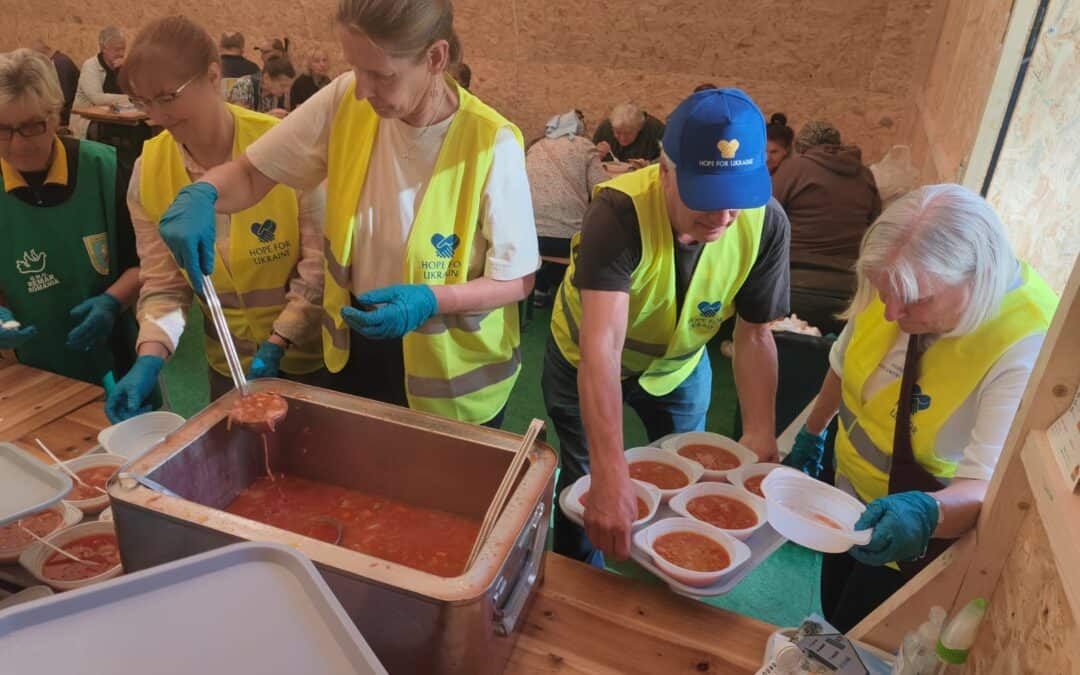
A food kit may look simple when it reaches a family: a bag or box filled with groceries that can help put meals on the table for the days ahead.
Getting that food into someone's hands is often much more complicated.
Across Ukraine, war has disrupted livelihoods, damaged infrastructure, displaced families, and made ordinary tasks like grocery shopping harder in some communities. According to the World Food Programme , millions of people in Ukraine continue to need humanitarian assistance, including food and livelihood support.
For organizations delivering food aid in Ukraine, the work is not simply about buying groceries. It involves understanding where help is needed, preparing practical food assistance, organizing transportation, working with local teams, and getting supplies into the hands of families who need them.
In short: food aid reaches families in Ukraine through a chain of sourcing, packing, transportation, local coordination, and direct distribution. The type of help can vary from food kits and fresh bread to prepared meals and other household essentials.
Why Is Food Aid Still Needed in Ukraine?
Ukraine is one of the world's major agricultural producers, so it is fair to ask why humanitarian food assistance is still necessary.
The problem is not always whether food exists somewhere in the country. The bigger issue can be whether a particular family can safely reach it and afford it.
The Food and Agriculture Organization of the United Nations has reported that national food availability remains generally adequate, while access to food continues to be a challenge for vulnerable households. War-related disruption, loss of income, displacement, higher costs, damaged infrastructure, and explosive hazards can all make it more difficult for families to maintain reliable access to food.
Conditions can be especially difficult in areas closer to active fighting, where damaged roads, security risks, disrupted businesses, and reduced income can make normal food access less reliable.
That is where humanitarian food programs become especially important.
How Does Food Aid Actually Reach a Family?
The process varies by organization and location, but there are several basic steps that usually happen before a family receives food.
Understanding Who Needs Help
Food distribution starts with understanding the needs of a community.
A displaced family living in temporary housing may need staple groceries they can prepare themselves. An older person living alone may benefit more from a prepared meal. Someone living near active fighting may need food that can be stored because regular trips to a supermarket are difficult or unsafe.
Hope for Ukraine's Family Support Program serves families and individuals affected by war, displacement, poverty, and other difficult circumstances.
Preparing Food People Can Actually Use
A useful food kit is not simply a collection of whatever items happen to be available.
It should contain practical staples that households can store, prepare, and turn into multiple meals.
Across the wider humanitarian response in Ukraine, food kits can include items such as flour, pasta, grains, canned foods, cooking oil, sugar, and salt.
Hope for Ukraine also provides staple groceries, prepared meals, bread, hygiene products, and other essential supplies depending on the needs of a community.
The form of assistance matters. A family with a working kitchen may benefit most from groceries. A displaced senior without reliable cooking facilities may need a hot meal that is ready to eat.
Packing and Organizing the Aid
Before food can leave a warehouse, kitchen, or distribution point, it has to be organized.
That means grouping staples into practical kits, preparing meals where kitchens are involved, tracking quantities, determining where supplies need to go, and coordinating volunteers and local teams.
It is the part of humanitarian work that rarely appears in the final photograph, but it is what makes the final delivery possible.
Moving Food Across Ukraine
Transportation is another major part of food assistance.
Ukraine is a large country, and the people who need help are not concentrated in one area. Some are living in cities. Others are in villages. Some have been displaced, while others remain in communities affected by attacks and damaged infrastructure.
Delivery teams may have to work around changing security conditions, damaged roads, and other disruptions.
Local teams and volunteers are especially important because they often understand their communities best. They know which families are struggling, which areas are harder to reach, and how assistance can be distributed most effectively.
The Food Reaches the Family
This is the part most people see.
A volunteer carries a food kit to a home. A family receives groceries. An older resident sits down for a warm meal. Bread reaches a shelter or community distribution point.
For the person receiving that assistance, the delivery can mean more than food.
Groceries can allow a household to use limited income for medicine, utilities, transportation, or children's needs. A hot meal can help someone who cannot easily cook. Bread can provide something immediately useful that can be shared across a household.
What Kind of Food Aid Does Hope for Ukraine Provide?
Food assistance is not one single program or one single type of package. Different circumstances call for different forms of help.
Food Kits
Staple groceries give families with cooking facilities the ability to prepare meals over several days.
Hot Meals
Prepared meals help displaced people, older adults, and families who may not have dependable access to a kitchen.
Fresh Bread
Bread can be eaten immediately, shared easily, and delivered alongside other food and household necessities.
Children's Food Support
Children may receive meals or food assistance through family, educational, and humanitarian programs.
What Does Hope for Ukraine's Food Program Look Like Today?
Hope for Ukraine's food assistance is built around consistent, practical support.
Teams and volunteers distribute groceries and food kits, while partner kitchens prepare meals for people who need ready-to-eat food.
These figures represent more than distributions.
Each food kit or meal is one less immediate problem a family has to solve while dealing with displacement, damaged homes, lost income, or the uncertainty of war.
Why Are Hot Meals Important Alongside Food Kits?
Not every household has the ability to cook.
Some displaced people live in temporary accommodation. Older adults may have difficulty preparing meals themselves. Electricity or gas interruptions can also make cooking difficult.
That is why prepared food remains an important part of humanitarian support.
Hope for Ukraine provides hot meals to displaced people and older residents through food assistance locations and partner kitchens in communities including Rivne, Kyiv, Irpin, and Lviv.
In Lviv, HFU's soup kitchen work helps provide vulnerable residents and people displaced by the war with something simple but important: a warm meal and a place where help is available.
Why Does Bread Matter So Much?
Bread may be one of the simplest items distributed through humanitarian aid, but that simplicity is part of its value.
It does not require complicated preparation. It can be eaten immediately. It can accompany soup or another meal. It can also be shared easily among family members.
For a household dealing with uncertainty, even something as ordinary as a fresh loaf of bread can reduce one small burden that day.
Food Aid Is About Access, Not Just Supply
One of the most important things to understand about food insecurity in Ukraine is that the country can produce large amounts of food while individual households still struggle to obtain enough of it.
Food access depends on many things working at the same time: farms, storage, transportation, functioning markets, safe roads, household income, electricity, and the ability to travel.
When war interrupts those systems, food may still exist nationally while becoming difficult to reach locally.
FAO has also reported that explosive hazards and war-related damage continue to affect agricultural land and livelihoods in frontline regions.
That is why humanitarian food assistance remains important even years into the war.
Why Local Teams Matter
Humanitarian assistance works best when it is connected to the communities it serves.
Local teams can see changing needs quickly. They may know which families have recently arrived, which older residents are isolated, which communities have lost access to a grocery store, and where transportation has become difficult.
That local knowledge helps turn a general supply of food into practical help for a specific family.
Help Keep Food Moving to Families in Ukraine
Your support helps Hope for Ukraine continue providing food kits, warm meals, bread, and essential supplies to families and individuals affected by war and displacement.
Help Feed Families in Ukraine →What Happens After a Food Distribution?
The work does not end when one truck is emptied or one food kit is delivered.
Humanitarian needs change from week to week. Families move. Frontline conditions shift. Supplies need to be replenished. Kitchens need ingredients. Distribution teams need to prepare for the next delivery.
That repetition is what makes food assistance dependable.
A single distribution can help a family today. A functioning food program is what allows that help to continue tomorrow.
Frequently Asked Questions About Food Aid in Ukraine
Why does Ukraine still need food aid?
Ukraine continues to produce food, but war has disrupted household incomes, transportation, infrastructure, markets, and safe access in some communities. Families may struggle to afford or reach food even when national supplies are available.
What is usually included in a food aid kit?
Contents vary, but food kits commonly contain shelf-stable staples such as grains, pasta, flour, canned foods, cooking oil, sugar, and salt. The goal is to provide foods households can store and use for multiple meals.
Who receives Hope for Ukraine food assistance?
Hope for Ukraine supports displaced families, children, older adults, people facing poverty, and other households affected by war, damaged homes, lost income, or disrupted access to basic necessities.
Does Hope for Ukraine provide more than food kits?
Yes. HFU's food assistance also includes prepared hot meals, fresh bread, hygiene products, and other essential supplies depending on the needs of the community.
How often does Hope for Ukraine distribute food?
Hope for Ukraine currently reports distributing more than 2,000 food kits each week and serving more than 1,000 hot meals each day through its food assistance work.
How does food aid reach frontline communities?
Aid organizations work with local teams, volunteers, drivers, kitchens, and partner organizations to prepare and transport assistance. Delivery plans may change depending on security conditions, road access, and the needs of individual communities.