
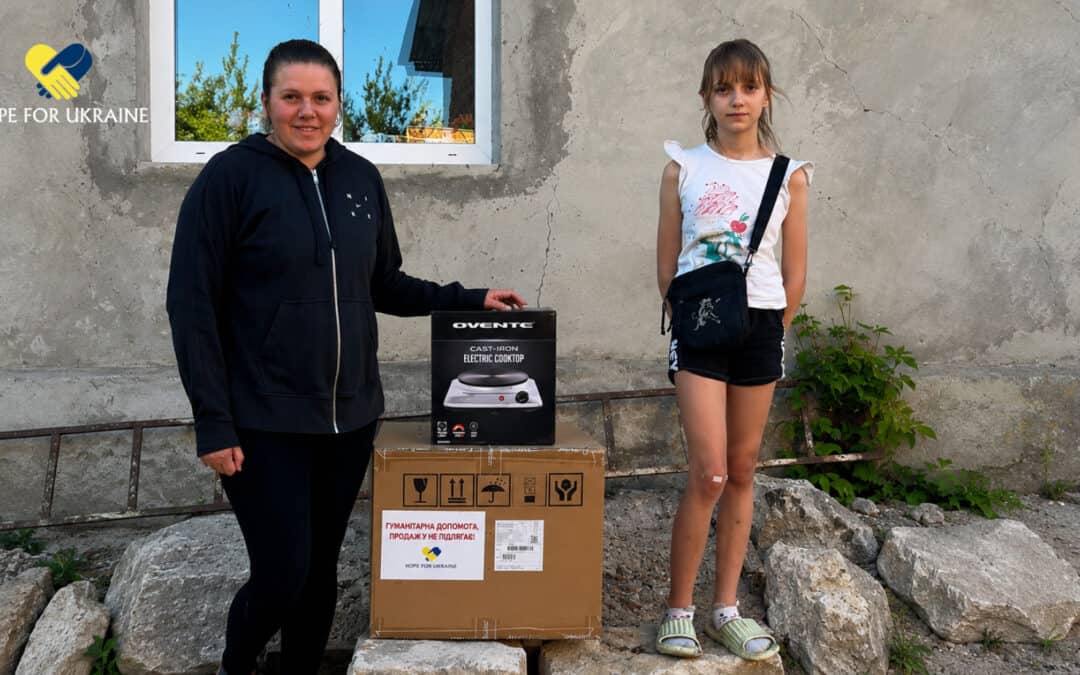
The mother keeps one hand on the electric cooktop box. Her daughter stands quietly beside her. At their feet sits a large cardboard box holding a portable power station. Behind them, cracks run through a gray concrete wall.
There is no reliable power grid here. No one can tell her when the electricity will come back. There is only a mother trying to get her family through another week.
That question, when the power will come back, isn’t rhetorical anymore. Russian forces have carried out near daily attacks on Ukraine’s energy infrastructure since the start of this winter, and the damage runs far past inconvenience. In January 2026 alone, five large-scale coordinated attacks damaged or destroyed energy infrastructure in at least 17 regions of Ukraine, including Kyiv, leaving millions of people with electricity for only a few hours a day for the entire month. President Zelensky called it what it was and declared a national energy emergency on January 14, 2026.
For a family near the front line, that emergency isn’t a headline. It’s whether dinner happens tonight.
When the Grid Fails, Daily Life Stops
Most of us never have to plan a meal around whether the power will hold.
We plug in a phone without thinking. We flip a switch when the sun goes down. We heat food the moment someone gets hungry.
For families near Ukraine’s front line, every one of those actions has become a question with no fixed answer. Can we cook tonight? Can we keep a phone charged in case we need to call for help? Will the kids have light after dark? Will we even hear an air raid warning if the battery dies first?
In the Dnipropetrovsk region alone, more than 800,000 households lost electricity after a wave of attacks this winter, and outages spread through Zaporizhzhia, closer to the front line, as well. Some communities went 14 to 16 hours a day without power, and lost water, heating, and phone service along with it. That’s not one bad night. That’s most of a family’s waking hours spent waiting.
The headlines have mostly moved on from Ukraine’s energy crisis. This family hasn’t had that option. They’re still standing beside a damaged wall and an unstable power line, trying to hold onto the routines that make a home feel like a home.
A Hot Meal Shouldn’t Depend on the Grid
A solar resilience kit can’t end a war. It can’t rebuild a power plant or patch a national grid that’s been hit this hard. Russian forces have targeted Ukraine’s transmission and heating infrastructure so repeatedly this winter that authorities have had to impose scheduled rolling blackouts nationwide, at times leaving people with power for only a couple of hours a day, during the coldest winter Ukraine has seen since 2010.
What a kit can do is smaller, and it’s still enough to matter. It lets a mother cook when the grid goes down. It keeps a phone charged so a family can hear a warning, reach a relative, or call for help. It puts light in a room after dark and gives a child a little steadiness on another uncertain night.
Today, this mother and daughter received exactly that: a solar resilience kit from Hope For Ukraine, built around a Jackery portable power station and an electric cooktop. On their own, those are ordinary household items. For this family, they mean food, communication, and a measure of safety that no longer depends on whether the power lines stay up.
Hope For Ukraine’s Solar Energy Resilience Program works through local teams and trusted partners to get portable power directly into the hands of families facing repeated outages, including communities near the front line where a repaired grid could still be a long way off.
This Is What Resilience Actually Looks Like
Resilience doesn’t always look dramatic. Sometimes it looks like a mother resting her hand on a box.
It looks like a daughter standing beside her, already knowing there’s a way to make dinner even if the power disappears again tonight.
For this family, the kit means they can cook without waiting on the grid. They can charge a phone. They can turn on a light when the sky goes dark outside. They can face the next blackout with something they didn’t have before: a plan that doesn’t depend on Russia’s next attack.
That’s a small thing to ask for. It shouldn’t take a war to make it hard to get.
How You Can Help a Family Like This One
You can help Hope For Ukraine reach another family living with the same uncertainty. A gift to the Solar Energy Resilience Program puts a working power source in a home that’s been living without one.
You can also donate to support families across Ukraine through food, shelter, medical care, and other direct aid delivered through programs like Family Support and Hope Circle.
No family should have to sit in the dark and wonder if they’ll get to cook a meal or call someone they love. Right now, near Ukraine’s front line, thousands still are.