
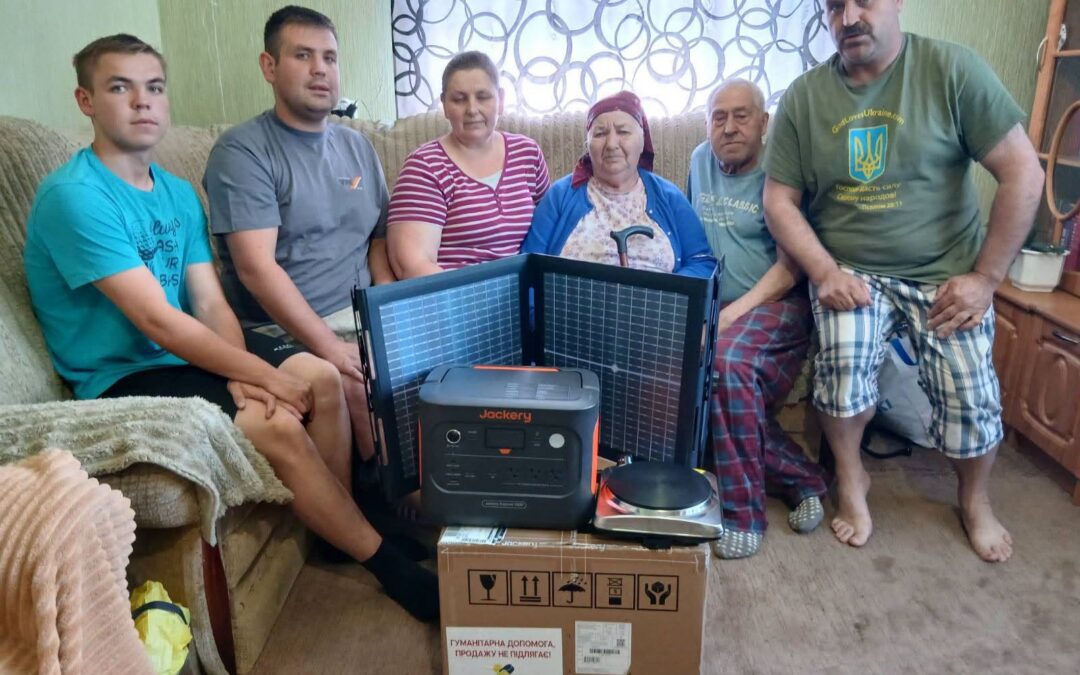
Six people are seated on a couch and chair, shoulder-to-shoulder, in a Ukrainian living room. Centered and holding a cane is an elderly female. In front of them stands a portable power station positioned between two foldable solar panels. Next to it lies a one-burner electric stove.
Mostly taking up the available space on the floor, the equipment’s purpose is to allow normal life to go on even when the electrical supply stops.
Although we do not know how many hours these individuals have been without power or which appliance they plan to charge first, the picture clearly shows what a practical form of energy assistance looks like. There is enough light to see beyond sunset; there will be enough battery time left for emergency calls/notifications, etc., and there is now a method of preparing meals using hot water when the home’s kitchen cannot get power from the grid.
The ability to perform such daily routines is becoming increasingly unpredictable for millions of Ukrainians.
According to a 2026 UN Report released in June, Russian military forces consistently and intentionally attacked Ukraine’s energy-related infrastructure over the course of the Winter of 2025-2026. These attacks were directed against facilities associated with generating, transporting and distributing power (electricity) throughout Ukraine.
During the period of October 2025-March 2026 alone, Russia launched no fewer than 423 attacks against Ukraine’s electricity infrastructure. At least 74 separate attacks occurred against combined heat and power plants (and/or other heating related facilities), as reported by the United Nations based upon a summation of the research findings.
Damage caused to those facilities resulted in protracted rolling blackouts affecting homes, hospitals, schools and other vital services. Some residential consumers had access to electricity for only a few hours per day. The UN stated that the country would not be able to restore full capacity of its electricity generation prior to the start of the next winter.
Losses of power can also present hazards during warmer months. The World Health Organization’s 2026 Summer Risk Assessment notes that unreliable electricity supplies can disrupt medical equipment and the cold storage systems required to preserve vaccines and temperature sensitive medications. Outages in homes create barriers to storing food safely, maintaining basic hygiene standards and managing temperatures during extreme heat events.
It is because of this reason that the equipment located in front of the group of people photographed above is so very important.
Hope For Ukraine’s Solar Energy Resilience Program provides portable solar systems to people experiencing power failures and damaged infrastructure due to war. The foldable solar panels collect sunlight and convert it into usable electricity to recharge the portable power station. The stored electricity within the power station can then be utilized to provide the necessary power to sustain basic needs until such time as the power grid returns.
The electric cook-top adjacent to the portable power station is just as important an element in the solar kit. While most discussions regarding electricity focus on lighting and phone batteries, it is ultimately electricity that allows someone to boil water or cook food. For senior citizens; individuals with disabilities/mobility issues; families with young children, locating alternative cooking sources during extended outages may not be possible.
While solar kits will not repair a destroyed power plant; nor can they prevent the next missile or drone attack, they can provide people with a reliable source of electricity within their own living spaces. This translates into reduced time in complete darkness, reduced uncertainty concerning the possibility of charging a phone and another option for preparing food during extended outages.
As part of its mission to deliver 1250 Solar Energy Resilience Kits in 2026, Hope For Ukraine continues to distribute its kits. With each delivery, it makes good on its promise to bring this reality into the rooms of real people who will utilize the equipment for years after the photographs are taken.
Still many distributions need to occur as Ukraine prepares for yet another winter with an energy system that remains severely damaged and subject to continued attack. By supporting Hope For Ukraine, you enable us to continue placing solar panels, portable power stations and electric stoves into the hands of people who cannot rely on their local power grids.
When you support Hope For Ukraine, your donation enables the six people shown in this photograph along with all those who remain awaiting relief, to count on having access to power that can be relied upon once the electricity is turned off again.
About the Author
Evan Raftes serves as the Marketing and Community Engagement Manager at Hope For Ukraine, sharing the stories of Ukrainian communities and connecting supporters with meaningful ways to help children and families affected by the war.