Much of my work for Hope For Ukraine takes place thousands of miles from the people and animals our programs support. I often learn what is happening through photographs and updates sent from Ukraine.
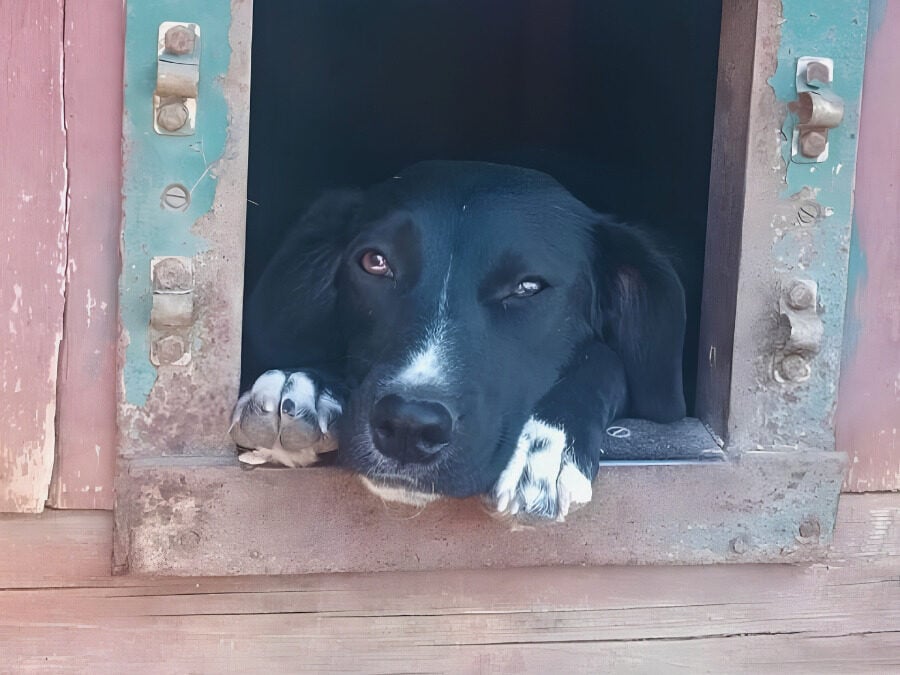
When these images were shared with our team, I kept returning to the first one.
A black dog rests its head and front paws on the edge of a small opening cut into a wooden kennel. The paint surrounding the entrance is chipped. The metal fasteners are worn and rusted. The space inside is dark, but the dog looks directly toward the camera.
I have never met this dog. I cannot tell you its name, where it was found, or what happened before this photograph was taken. I was not given the individual histories of the other dogs in the images either.
Still, I can tell you what the photographs show.
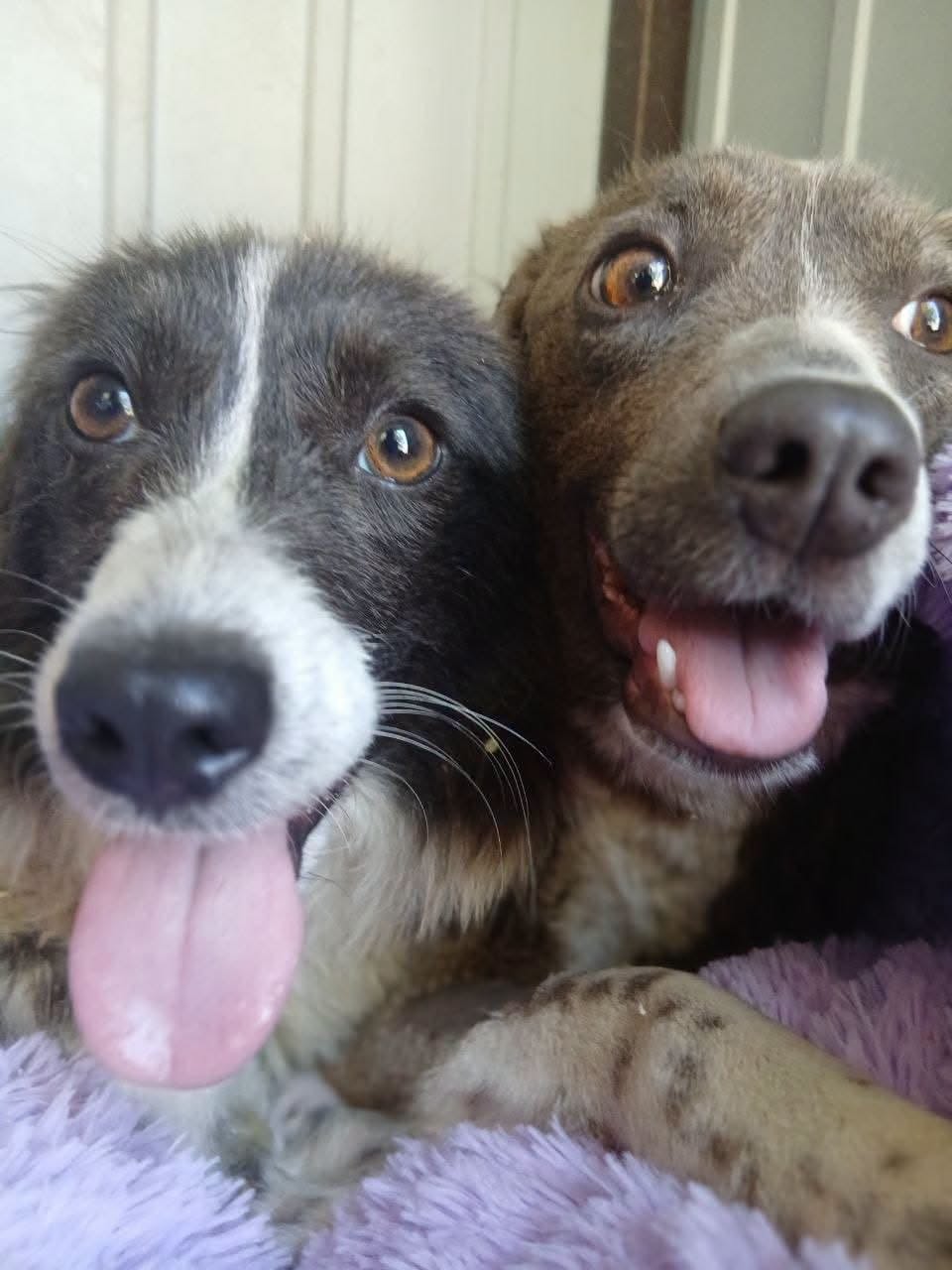
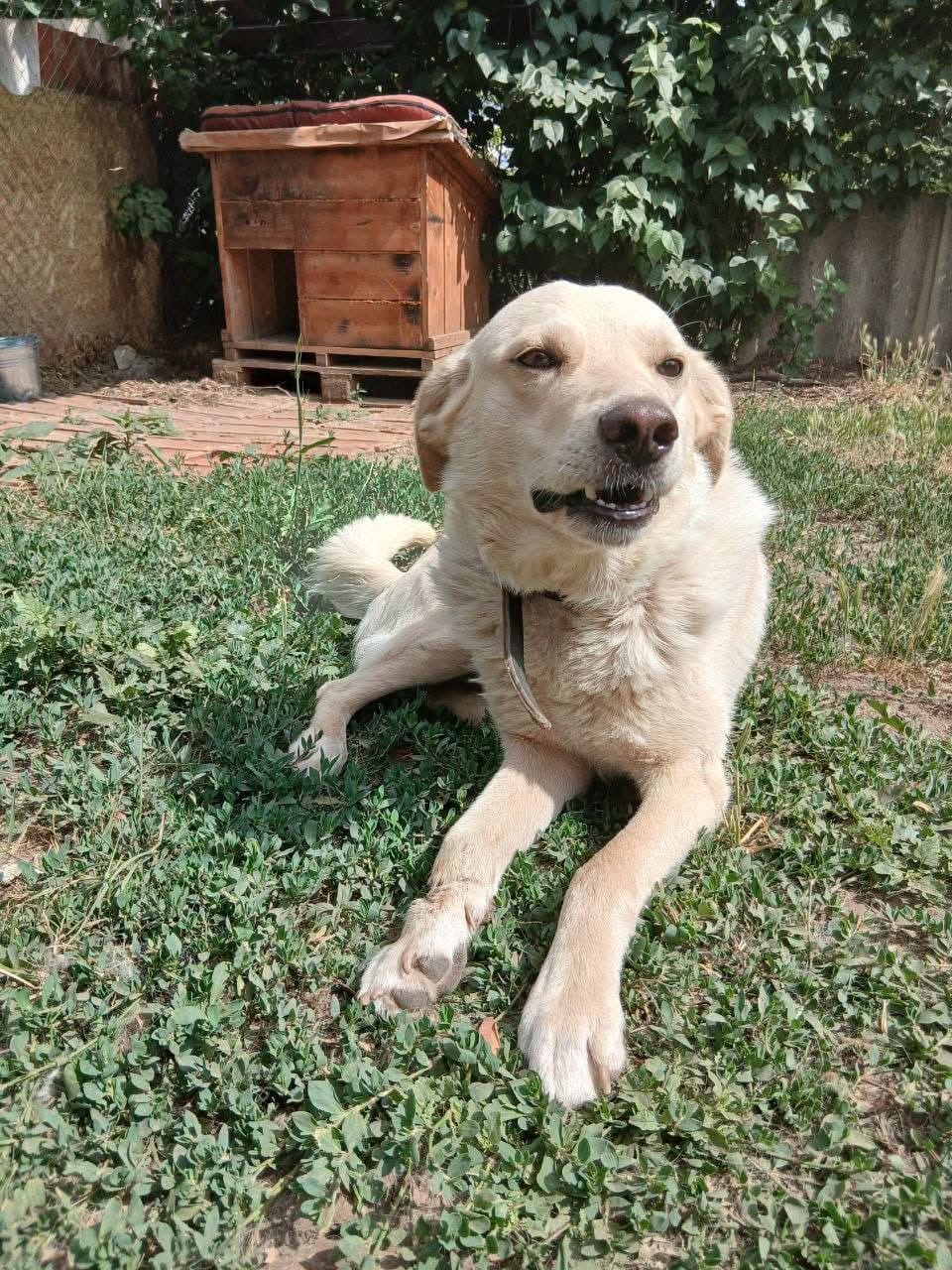
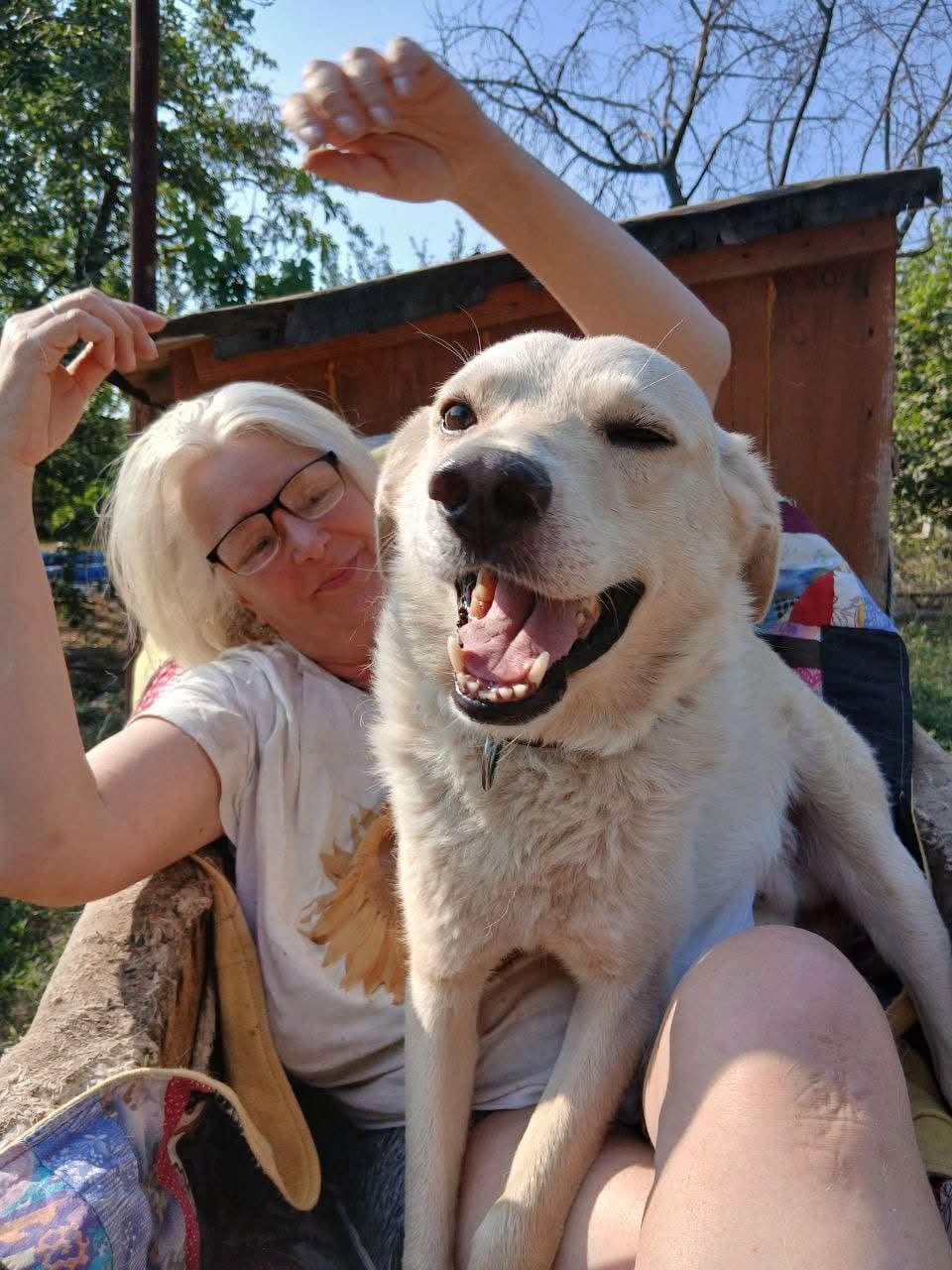
The black dog has a covered place to rest. In another image, two dogs lie close together on a soft purple blanket, their faces filling nearly the entire frame. A cream-colored dog stretches out in the grass beside a wooden shelter. In the final photograph, a dog sits comfortably beside a woman as she reaches toward its head.
The photographs do not show a dramatic rescue. They show the quieter part of animal care. A kennel. A blanket. A patch of grass. A person willing to sit nearby.
Before working with Hope For Ukraine, I did not fully understand how closely animal rescue is connected to humanitarian work. When families are forced to evacuate, they may have only a short time to gather documents, medicine, clothing, and whatever else they can carry.
Many families do everything possible to bring their pets. A United Nations account of evacuations from Ukraine’s front-line communities describes families leaving with only basic belongings, sometimes bringing a beloved animal with them. Other families are separated from their pets by damaged roads, limited transportation, unsafe conditions, or the speed of an emergency evacuation.
The animals do not understand why their families are gone. They only know that the door no longer opens, their food bowl is empty, and the familiar voices they once heard have disappeared.
Across Ukraine, shelters and volunteers have taken on the daily responsibility of caring for animals affected by the war. The International Fund for Animal Welfare reports that it and its partners have helped more than 100,000 animals since February 2022. That work has included supplying food and veterinary materials, supporting shelters, and helping families remain with their pets when possible.
Those numbers help explain the size of the need, but the photographs make it personal.
One dog needs enough food for today. Another may need a veterinary examination, medicine, or vaccinations. A shelter needs clean water, bedding, secure kennels, and people who will return the next morning to do the work again.
Through Hope For Ukraine’s Hope Pets Program, teams and partners help provide food, medical attention, transportation, and shelter for animals affected by the war. When an animal cannot be moved immediately, food deliveries can help keep it alive until transportation becomes possible. Animals brought to trusted shelters receive water, food, veterinary care, socialization, and time to recover.
Looking at these photographs, I am reminded that recovery is not always something we can measure through one dramatic moment. Sometimes it happens slowly.
It happens when a dog begins resting instead of constantly watching for danger. It happens when two animals feel comfortable enough to sleep beside each other. It happens when a dog allows someone to sit close, reach out a hand, and offer attention without pulling away.
We do not know how long the dogs in these photographs have been receiving care. We do not know whether they once lived with families or whether permanent homes are waiting for them.
What we know is that, at the moment these photographs were taken, they had somewhere to rest and someone looking after them.
That does not happen without daily effort. Food must be purchased and delivered. Shelter spaces must be cleaned and repaired. Rescue vehicles require fuel. Sick and injured animals need medical attention, and some may remain in shelter care for months.
More animals will continue to need that help as communities face displacement, shelling, and uncertainty.
When you support Hope For Ukraine, you help us continue providing the food, transportation, medical care, and shelter that give vulnerable animals time to recover. You may never meet the dog resting inside that wooden kennel, but you can still help make sure it has a safe place to sleep tonight.
About the Author
Evan Raftes serves as the Marketing and Community Engagement Manager at Hope For Ukraine, sharing the stories of Ukrainian communities and connecting supporters with meaningful ways to help children and families affected by the war.