
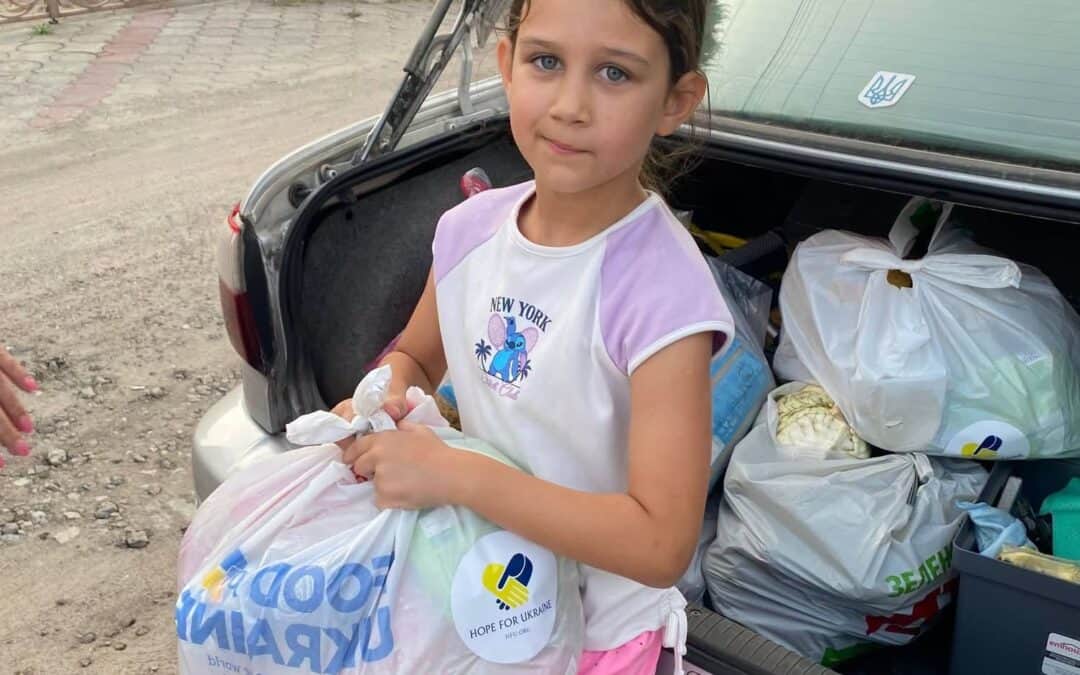
For a child living near Ukraine’s front line, an ordinary school day can look very different from what most families imagine. A lesson may be interrupted by an air raid alert, a classroom may be located underground instead of above ground, and remote learning may continue because a school cannot safely reopen. At home, families may keep emergency bags packed near the door or make difficult decisions about whether it is safer to remain in their community or leave behind their home, relatives, friends, and familiar routines.
More than four years into the full-scale war, these disruptions have become part of childhood for millions of Ukrainian children. The experience is not the same everywhere. Children living in western cities may have much greater access to schools, services, and ordinary routines than children in communities close to active fighting. Even within front-line regions, conditions can differ significantly from one town to the next.
For children in the most heavily affected areas, however, war is not something distant that they encounter through news reports. It can influence where they sleep, where they study, who they see, how often they leave home, and whether everyday activities feel safe.
In 2026, UNICEF estimates that 2.4 million children are among those in humanitarian need connected to the war in Ukraine. UNICEF has also reported that more than a third of Ukraine’s children remain displaced, either within the country or as refugees abroad.
Understanding what childhood looks like under these conditions requires looking beyond casualty figures and headlines. It means examining the ordinary parts of growing up that have been altered by years of conflict: school, friendships, family routines, play, health care, displacement, and the basic expectation of feeling safe.
What Is Daily Life Like for Children Near Ukraine’s Front Line?
There is no single version of childhood near the front line. Some children continue living with their families in the homes where they grew up. Others have evacuated and later returned. Some families have been displaced multiple times as the security situation changed. Children may attend school in person, follow a hybrid schedule, or spend years learning almost entirely online.
What many of these experiences share is uncertainty. Decisions that would normally be routine can depend on the security situation that day. A family may have to consider whether school can open safely, whether transportation is available, whether electricity will remain on long enough to complete homework, or whether another air raid alert will interrupt class. Some families also live with the larger question of whether they will eventually need to leave their community altogether.
UNICEF has warned that children across Ukraine continue to experience attacks, displacement, interruptions to education, reduced access to essential services, and prolonged fear. These pressures can affect both children’s ability to learn and their psychological well-being. The closer a family lives to active fighting, the harder it can become to separate normal daily life from the realities of war.
School Can Depend on Whether a Safe Shelter Exists
Education is one of the clearest examples of how the war has reshaped childhood.
For many Ukrainian children, attending school is no longer simply a matter of walking into a classroom each morning. Whether in-person learning is possible can depend on the availability of a functioning shelter, the frequency of air raid alerts, the condition of the school building, and how close the community is to active fighting.
Save the Children reported that about two-thirds of children surveyed in front-line regions in 2024 were unable to attend school fully in person. Among 344 children surveyed across Chernihiv, Kharkiv, Donetsk, Dnipro, Zaporizhzhia, and Mykolaiv regions, 64 percent said they were learning only online.
The effects have continued well beyond the first years of the invasion. In 2025, Save the Children estimated that around 400,000 children had gone roughly 580 school days without entering a classroom. That represents far more than lost lessons.
School provides structure, relationships with teachers, time with friends, extracurricular activities, and one of the most important routines of childhood. When education moves almost entirely onto a computer screen, children can lose many of those experiences even if they continue completing assignments and attending virtual lessons.
Air Raid Alerts Have Become Part of the School Day
Even where schools are able to reopen, the school day can still be interrupted repeatedly by air raid alerts.
UNICEF reported that during the first 15 days of Ukraine’s 2026–2027 school year, more than 1,000 air raid alerts sounded across the country. For students and teachers, an alert may mean stopping a lesson, leaving the classroom, and moving into a designated shelter. In some schools, lessons continue underground when conditions allow. In others, students wait until the alert ends before returning to class.
These interruptions can appear brief when viewed individually, but over months and years they accumulate. UNICEF previously estimated that children in some front-line cities spent between 3,000 and 5,000 hours sheltering in basements and underground metro stations during the first two years of the full-scale war.
That represents months of childhood spent waiting for danger to pass.
The educational effect is significant, but the psychological effect also matters. Children are being asked to switch repeatedly between ordinary activities and emergency procedures, sometimes several times during the same day.
Some Children Have Not Known a Normal Classroom for Years
The duration of the war has created another problem that becomes more significant every year: for some children, wartime schooling is now the only kind of schooling they clearly remember.
A child who was seven years old when the full-scale invasion began in February 2022 is now approaching adolescence. A teenager preparing to graduate in 2026 may have spent a large part of secondary school moving between online classes, air raid shelters, displacement, and damaged school buildings.
Save the Children documented the experiences of graduating students in Ukraine’s Mykolaiv region in 2026. Their school, located roughly 50 kilometers from the front line, had been heavily damaged by shelling. Students described progressing from primary school toward graduation while years of war repeatedly disrupted their education.
This long timeline matters because the impact is no longer limited to a temporary interruption. For younger children, school with air raid alerts, security procedures, shelters, and online learning may feel ordinary simply because they have little memory of anything else.
Displacement Can Change Nearly Every Part of a Child’s Life
Displacement has also become a defining part of childhood for millions of Ukrainian children.
UNICEF reported in February 2026 that approximately 2.59 million Ukrainian children remained displaced. That included roughly 791,000 children displaced within Ukraine and nearly 1.8 million children living as refugees outside the country.
Leaving a dangerous area can provide physical safety, but displacement carries its own losses. A child may leave behind their bedroom, school, friends, grandparents, neighborhood, sports team, pets, and the small routines that once made daily life predictable.
Some families leave with time to prepare. Others leave quickly and take only what they can carry. Some eventually return home, while others move several times as conditions change.
Repeated displacement can make it especially difficult for children to feel settled. They may begin a new school or make new friends while knowing there is no guarantee that they will be able to stay. UNICEF’s 2026 humanitarian planning identifies prolonged and repeated displacement as one of the major challenges facing children and families inside Ukraine and in neighboring countries.
Safety Decisions Become Part of Family Life
Children living near the front line often grow up surrounded by decisions that children in peaceful communities rarely have to consider.
Families may need to know which part of the home offers the most protection, how quickly they can reach a shelter, what belongs in an emergency bag, or whether it is safer to sleep in one room rather than another. Parents may limit where children can travel, avoid certain outdoor spaces, or reconsider trips that would once have been routine.
A visit to school, a playground, a football field, or a relative’s home can require additional thought.
The danger is not theoretical. Save the Children reported in May 2026 that UN figures showed 791 children had been killed and 2,752 injured between February 2022 and April 2026. The organization also reported that child casualties rose during the first four months of 2026 compared with the final four months of 2025.
The effect of those attacks extends beyond the children directly harmed. When families hear about an attack in a nearby community, know someone who was injured, or experience explosions themselves, the possibility of danger can influence how ordinary decisions are made.
War Also Changes Play, Friendships, and Free Time
The effects of war are not limited to major systems such as schools, hospitals, and transportation. Conflict also changes the smaller experiences that help make childhood feel normal.
Children need time to play, see friends, participate in sports, attend birthday parties, explore their neighborhoods, and simply spend time outside without thinking about danger. In areas affected by fighting, many of those activities can become difficult.
A playground may be unsafe. A sports field may be damaged. A close friend may have evacuated to another city or another country. Parents may understandably become reluctant to allow children to travel independently.
UNICEF has described the war as taking away years of school, playtime, relationships, and ordinary experiences with loved ones for many children in Ukraine.
These losses may appear less urgent than shelter, food, or physical protection, but they still matter. Play, friendships, recreation, and social connection are important parts of healthy childhood development.
Routine Becomes More Important When Everything Else Is Uncertain
When children live through prolonged instability, ordinary routines can become especially valuable.
Going to school, eating meals at familiar times, seeing the same teacher, reading before bed, spending time with friends, celebrating birthdays, or attending a summer program can provide a sense of predictability when the larger environment feels unstable.
This is one reason education and child-focused humanitarian programs matter beyond the immediate service they provide. A school does more than teach academic subjects. A recreation program does more than give children something to do. A familiar routine can help restore a sense that parts of life remain understandable and dependable.
Save the Children’s 2026 research on education in Ukraine describes what it calls a growing “safety divide.” A child’s ability to access education can depend heavily on where the family lives, how close they are to fighting, and what resources they have available.
A child with reliable electricity, internet access, a computer, a safe home, and adults available to help with remote learning can have a very different experience from a child studying in temporary housing while dealing with repeated outages.
War Can Affect Children Even When They Are Physically Safe
Physical survival is only one part of a child’s well-being.
A child may survive an attack without a physical injury and still be deeply affected by what happened. They may have heard explosions, lost a family member or friend, watched adults around them respond to danger, evacuated suddenly, or spent months worrying about someone they love.
Children do not all respond to these experiences in the same way. Some may become anxious or withdrawn. Others can struggle with concentration, sleep, or emotional regulation. Some may appear outwardly calm while carrying significant stress internally.
UNICEF has warned that prolonged exposure to violence, displacement, isolation, disrupted education, family separation, and loss can affect children’s mental health as well as their ability to learn and experience ordinary childhood.
The wider mental health burden is substantial. The World Health Organization estimates that approximately 10 million people in Ukraine are affected by mental health challenges linked to the prolonged emergency, although that figure includes both adults and children.
Children Can Become Used to Things That Should Never Be Normal
One of the most difficult realities of prolonged conflict is that children adapt.
A child may know exactly where to go when an air raid alert sounds. They may recognize the warning on a parent’s phone immediately, understand which rooms have fewer windows, know what should be packed in an emergency bag, or continue a school lesson in a shelter with little explanation.
That adaptability can be a form of resilience, but adaptation should not be confused with normality.
A child becoming accustomed to air raid procedures does not mean those experiences are harmless. A child who knows how to respond calmly to an alert is still living with a threat that children should not have to manage.
This distinction is important when people outside Ukraine see families continuing to work, attend school, celebrate birthdays, and make plans. Life continues because people adapt to circumstances. That does not mean those circumstances have stopped affecting them.
Mines and Unexploded Ordnance Create Risks Beyond the Front Line
Danger can remain even after active fighting moves away from a community.
Mines and unexploded ordnance can remain in fields, forests, roadsides, abandoned buildings, and areas that were previously occupied or fought over. For families with children, that can change where it is safe to walk, play, or explore.
During the first quarter of 2026, UNICEF reported reaching more than 66,400 children and caregivers with explosive ordnance risk education and survivor assistance.
This type of education teaches children and families how to recognize potential hazards, avoid unfamiliar objects, and respond safely when something suspicious is found.
It is a form of education that no child should need, but in contaminated communities it can save lives.
Winter Adds Another Layer of Difficulty
Conditions near the front line can become even more difficult during winter.
Damage to Ukraine’s energy infrastructure can interrupt electricity, heating, water, and communications. In July 2026, UNICEF warned that weakened energy and heating systems could leave families facing another difficult winter. The organization also reported significant damage to water systems in some eastern regions.
For children, an extended outage affects much more than comfort. Remote school can become difficult or impossible without electricity or internet access. Phones, laptops, and other devices cannot be reliably charged. Homes can become colder, and preparing hot food may become more difficult.
Families already dealing with displacement or reduced income may also have fewer resources available to adapt.
As a result, damage to infrastructure can affect education, nutrition, communication, health, and family routines at the same time.
Health Care Can Be Harder to Reach Near the Front Line
Access to health care can also become less reliable in communities affected by fighting.
The World Health Organization reported that communities near the front line continue to face significant trauma needs and fragile referral systems while hospitals and clinics operate under pressure from attacks and damaged infrastructure.
For 2026, WHO estimates that 4.1 million people in Ukraine require health assistance, with particularly significant needs in front-line areas.
For families with children, these gaps can affect everything from routine appointments to emergency care. A local clinic may have been damaged or relocated. Families may need to travel farther to reach specialists. Children with disabilities, chronic illnesses, or rehabilitation needs may face additional barriers when services are disrupted.
These are another example of how the war can affect children without directly injuring them. When the systems around a child become less reliable, the burden on the entire family increases.
What Do Children in Ukraine Need Most?
Physical safety is the most immediate need, but protecting children during war involves much more than keeping them alive.
Children also need reliable education, health care, stable caregivers, friendships, opportunities to play, mental health and psychosocial support, and access to basic services such as heat, water, food, and electricity. They need spaces where they can continue developing, learning, and forming relationships.
UNICEF’s 2026 humanitarian plans in Ukraine reflect this wider approach. The response includes child protection, education, mental health and psychosocial support, health services, water and sanitation, humanitarian cash assistance, and support for families in heavily affected communities.
During the first three months of 2026, UNICEF and its partners reported providing mental health and psychosocial support to approximately 116,000 children, adolescents, and caregivers while helping around 35,000 children access education and early learning opportunities.
Those programs reflect an important principle: protecting children during war means protecting more than their physical safety. It also means preserving as much of childhood as circumstances allow.
How Hope For Ukraine Helps Children in Front-Line Communities
Hope For Ukraine works with children and families affected by the war, including communities where families continue to experience attacks, displacement, disrupted schooling, damaged infrastructure, and prolonged uncertainty.
Through child-focused programs and assistance in front-line communities, HFU works to provide practical support while creating opportunities for children to experience safety, connection, and ordinary childhood activities.
Humanitarian programs cannot erase what a child has already experienced. They cannot replace a destroyed home, restore lost years of school, or remove every source of uncertainty.
But they can improve what happens next.
A safe place to gather can give children time with others their age. School supplies can help a student continue learning. Psychosocial support can give families additional tools for coping with prolonged stress. Recreational programs can create hours in which a child is focused on playing rather than war.
During a prolonged conflict, preserving those pieces of ordinary childhood matters.
Help Protect Children in Ukraine
Frequently Asked Questions About Children in the Ukraine War
How many children in Ukraine need humanitarian assistance?
UNICEF’s 2026 humanitarian planning estimates that approximately 2.4 million children are in humanitarian need in connection with the war in Ukraine. Those needs can include protection, health care, education, mental health support, shelter, water, sanitation, and other essential services.
How many Ukrainian children are displaced?
As of February 2026, UNICEF reported that approximately 2.59 million Ukrainian children remained displaced. Around 791,000 were displaced within Ukraine, while nearly 1.8 million were living as refugees outside the country.
Are children in Ukraine still going to school?
Yes, but the way children attend school varies considerably. Some students attend fully in person, others follow hybrid schedules, and many children in front-line regions rely heavily on remote learning. Whether a school has a safe and functioning shelter can be a major factor in determining whether in-person classes are possible.
Do children in Ukraine have to use bomb shelters during school?
In many communities, yes. When an air raid alert sounds, students and teachers may be required to move to designated shelters. Some schools have adapted underground spaces so that lessons can continue during longer alerts.
How has the war affected children’s mental health in Ukraine?
Children have experienced prolonged exposure to violence, displacement, separation, disrupted education, grief, and uncertainty. UNICEF has warned that these experiences can affect children’s emotional well-being, ability to learn, concentration, relationships, and sense of safety.
Are children still being killed or injured in Ukraine?
Yes. Save the Children reported that UN figures showed at least 791 children had been killed and 2,752 injured between February 2022 and April 2026.
Why don’t all families evacuate front-line communities?
Families remain for many different reasons. Some care for older relatives, depend on local employment, have limited financial resources, face health or mobility barriers, or do not have secure housing elsewhere. Other families may leave and later return when conditions appear safer, only to face renewed insecurity.
What do children living near the front line need?
Children need physical safety, education, health care, stable caregivers, mental health and psychosocial support, social connection, opportunities to play, and reliable access to essentials such as food, clean water, electricity, and heating.
Childhood Continues, Even When War Changes Its Shape
One of the easiest mistakes to make when thinking about children in Ukraine is to imagine that childhood has simply disappeared.
It has not.
Children still make friends, complain about homework, play games, celebrate birthdays, laugh with their families, and think about what they want to become when they grow up. The difference is that many are doing those ordinary things under extraordinary circumstances.
A school lesson may continue in a shelter during an air raid alert. A birthday may take place during an electricity outage. A best friend may now live in another city or another country. A family’s evacuation bag may remain beside the door while everyone tries to continue with the day.
For children living near Ukraine’s front line, war does not replace childhood. It changes the conditions in which childhood has to happen.
After years of conflict, protecting children therefore means more than responding to immediate emergencies. It means helping preserve their ability to learn, develop relationships, feel safe, recover emotionally, and experience as much ordinary life as circumstances allow.
That work remains urgent in 2026.
Help Protect Children in Ukraine