
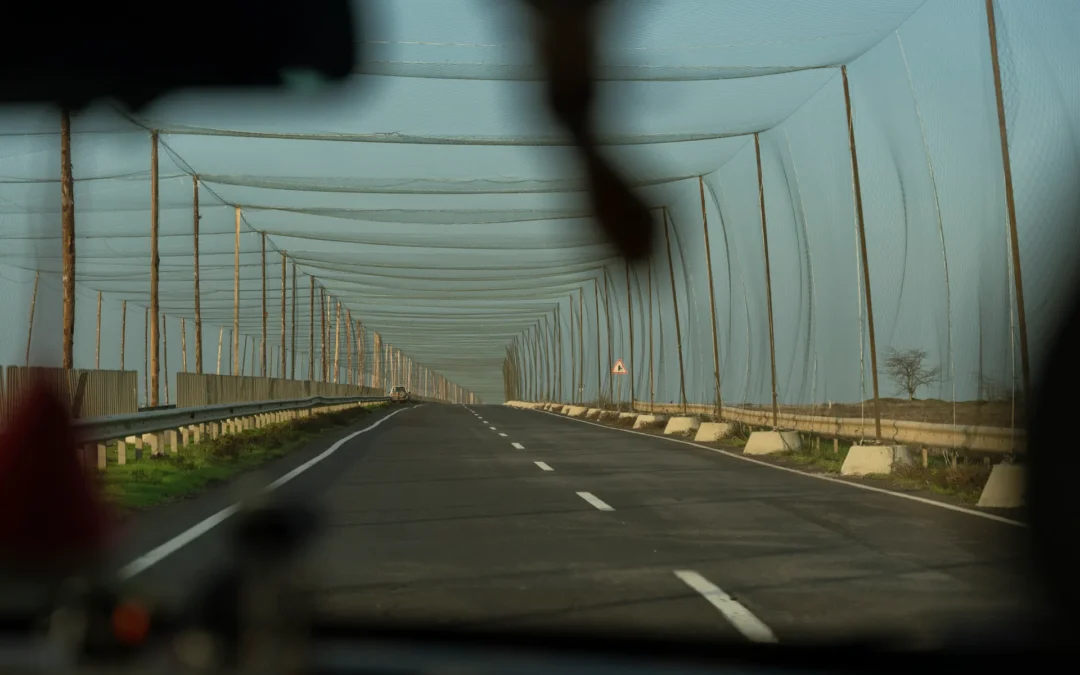
At 27 years old, Mark Zydga regularly makes a journey across Ukraine that few people could imagine.
He climbs into a refrigerated van with fellow volunteers and travels toward eastern Ukraine. They are not carrying humanitarian supplies or evacuating civilians. They are transporting the bodies of fallen Ukrainian soldiers back toward the families waiting for them at home.
Some of those round trips cover roughly 3,000 kilometers.
A new Metro report, now highlighted in the Hope For Ukraine Newsroom, takes readers inside the work of Mark and the volunteer crew known as On The Shield.
A Mission That Changed With the War
When Russia launched its full-scale invasion of Ukraine in 2022, Mark and friends from his local Baptist church in western Ukraine began helping evacuate civilians from the eastern part of the country.
As more Ukrainian soldiers were killed, another need emerged.
Mark told Metro that one of his classmates died in battle. At the time, he said, there was not yet an established process for bringing many fallen soldiers home, and appropriate refrigerated transportation was not always available.
People in Mark’s community knew that he and the other volunteers were already traveling east. Families began asking whether they could bring their loved ones home as well.
The church purchased a refrigerated van, and the volunteers began making the long journeys.
Since then, On The Shield has transported more than 1,000 fallen soldiers, according to Mark. He does not provide an exact figure because he considers the information sensitive during wartime.
What the Volunteers Face
The collection point is not always the same.
Mark told Metro that the bodies have already been transported away from the battlefield by the time his team receives them. Sometimes the volunteers collect them from morgues. Other times, the transfer takes place at a house or between vehicles.
Sometimes the remains are already prepared for transportation. In other cases, the volunteers must help prepare them.
For Mark, among the hardest moments are what he described to Metro as the “light packages.” Sometimes very little of a person’s body has been recovered. Other times, the fallen soldier is only 18 years old.
The volunteers then begin the long trip west.
Their work now brings fallen soldiers back to families in the Lutsk, Rivne and Zhytomyr areas.
At the end of those journeys are parents, spouses, relatives and friends who have been waiting for someone they love to come home.
A Husband Followed the Van for 600 Kilometers
One journey has stayed with Mark.
He told Metro about transporting the body of a woman who had been beside her husband in a trench when she was killed by a missile.
According to Mark’s account, her husband carried her for eight kilometers so that her body could be transported home. He later drove alongside the refrigerated van for approximately 600 kilometers.
Mark described the man as deeply broken by her death.
Those encounters have taken a psychological toll. Mark said the work has made him more reserved and closed off, particularly after repeatedly witnessing death and the grief of the families receiving their loved ones.
His experience is part of a much larger reality across Ukraine.
In February 2026, the International Committee of the Red Cross reported that tens of thousands of people across Ukraine were still waiting for confirmation about the fate of loved ones.
The return of fallen soldiers also continues on a national scale. On April 9, 2026, Reuters reported that Ukraine received 1,000 bodies that Russia said belonged to Ukrainian military personnel. Ukraine returned the bodies of 41 Russian soldiers in the same exchange.
Behind exchanges of that size are thousands of individual families waiting for answers.
Even the Drive Is Dangerous
On The Shield’s work also brings the volunteers closer to areas threatened by Russian drones.
Mark described what he called a “kill zone” that can extend for approximately 40 kilometers because of the distance drones can travel.
The team has also decided not to stop for fuel in eastern Ukraine. Mark told Metro that they avoid doing so because Russian forces have targeted gas stations with drones.
Despite what he has witnessed, Mark said the experience has not made him less caring.
Instead, he told Metro that it has made him “softer” and more appreciative of the time and life he has.
For the families waiting at the end of these journeys, the arrival of the refrigerated van means something deeply personal.
Someone they love has finally been brought home.
Hope For Ukraine will continue using our Newsroom to share reporting that helps people understand what Ukrainians are experiencing beyond battlefield maps and daily headlines.
When you support Hope For Ukraine, you help us continue humanitarian work for families and communities living through the consequences of this war.
About the Author
Evan Raftes serves as the Marketing and Community Engagement Manager at Hope For Ukraine, sharing the stories of Ukrainian communities and connecting supporters with meaningful ways to help children and families affected by the war.