
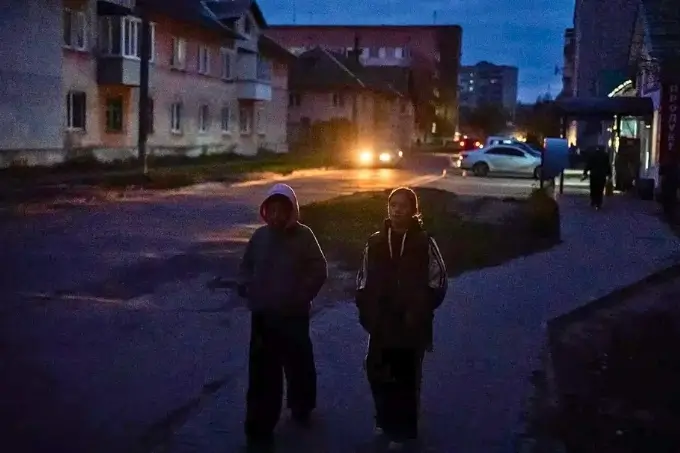
For a family in Ukraine, losing electricity in the middle of winter can mean much more than sitting in the dark.
It can mean losing heat when temperatures fall below freezing. Water can stop reaching an apartment. A refrigerator can no longer keep food cold. A phone used for emergency alerts can run out of power. Schools and health facilities can struggle to operate.
As Ukraine prepares for the winter of 2026–2027, humanitarian organizations are warning that millions of people remain vulnerable after another year of damage to the country’s energy system.
On September 21, the United Nations Independent International Commission of Inquiry on Ukraine warned that continued Russian attacks on critical energy infrastructure are increasing risks for civilians as winter approaches.
The concern is not based only on what might happen. It is based on what happened last winter and on the damage that remains.
Why Is Winter 2026–2027 a Concern in Ukraine?
The short answer is that Ukraine is entering another cold season with an already damaged electricity and heating system while the war continues.
During the winter of 2025–2026, the UN Human Rights Monitoring Mission documented repeated Russian attacks against electricity generation, transmission, distribution and heating infrastructure.
Between October 2025 and March 2026, the UN recorded at least 423 attacks on electricity generation, transmission and distribution facilities, along with at least 74 strikes on combined heat-and-power plants and other heating infrastructure.
The consequences reached far beyond the facilities themselves.
Emergency outages affected millions of people. At some points, scheduled rolling cuts left civilians with electricity for only a few hours a day. Hundreds of thousands experienced interruptions to heating, and some people went without heat and hot water for weeks.
The same UN reporting cautioned that the damage was extensive enough that Ukraine would not be able to fully restore its electricity-generation capacity before the next winter.
That means this winter begins with less room for error.
Last Winter Showed What Prolonged Outages Can Do
Winter in Ukraine can be severe.
During the 2025–2026 cold season, temperatures fell below -20°C (-4°F) during what the UN described as Ukraine’s coldest winter since 2010.
Under those conditions, electricity and heating become closely connected to basic safety.
The UN documented outages that cut water supplies in multi-story buildings, disrupted health care, closed schools and caused some residents to leave their homes. Older people, people with disabilities and others in vulnerable situations experienced particularly serious effects.
The World Health Organization has documented the same connection between energy and health.
Power outages can affect critical medical equipment, vaccine and medicine refrigeration, water systems and the ability of health facilities to continue operating.
WHO estimated in its 2026 emergency appeal that 150,000 to 250,000 hospitalized patients in frontline regions could be affected by failures of energy and water systems during winter.
So when Ukraine’s power system is damaged, the effects do not stop at the electrical outlet.
What Actually Happens When a Ukrainian Home Loses Power?
For someone following the war from outside Ukraine, the phrase “energy infrastructure” can sound distant and technical.
Inside a home, it is much simpler.
When electricity disappears for an extended period, a family may lose the ability to:
- Keep lights on after dark
- Charge phones and receive emergency information
- Refrigerate food and medicine
- Cook with electric appliances
- Work or attend school online
- Pump water in buildings that depend on electric systems
- Use some medical or mobility equipment
- Maintain heat when heating systems depend on electricity
The problem becomes more serious as an outage lasts longer.
A charged phone may be enough for the first few hours. Several days without dependable power, heating or water is a very different situation.
That is one reason winter preparation begins months before temperatures fall.
How Many People Could Need Winter Assistance?
The United Nations and humanitarian partners launched their 2026–2027 Winter Response Plan in July.
The plan seeks $358.4 million to assist 2.1 million people between October 2026 and March 2027.
It prioritizes people living near the front, newly displaced and evacuated families, people affected by attacks on civilian infrastructure, and other groups considered especially vulnerable.
Planned assistance includes heating support, repairs to damaged homes, health care, food, protection services and cash assistance.
The scale of the challenge has grown. The previous 2025–2026 winter plan targeted 1.7 million people. The new plan targets 2.1 million.
And those needs exist within a much larger reconstruction challenge.
A February 2026 assessment from the World Bank, European Commission, United Nations and Government of Ukraine estimated nearly $588 billion in reconstruction and recovery needs over the coming decade. It found that damaged or destroyed energy-sector assets had increased by approximately 21% compared with the previous assessment.
Why Frontline Communities Face an Even Harder Winter
The risks are particularly serious for communities close to active fighting.
People there are dealing with the same cold and power problems as the rest of the country while also facing attacks, damaged homes, displacement and reduced access to services.
Civilian harm has remained high in 2026.
According to the UN Human Rights Monitoring Mission, 2,222 civilians were killed and 13,058 injured between January and August 2026. Those verified casualties were 55% higher than during the same eight-month period in 2025.
Frontline communities also face growing risks from short-range drones. In August alone, the UN attributed 91 civilian deaths and 727 injuries to short-range drones, making them the primary cause of civilian casualties near the front that month.
For humanitarian workers, this can make something as ordinary as delivering food, medical supplies or winter assistance more complicated.
For the people who remain, winter does not replace the dangers of war. It adds another problem on top of them.
Why Electricity Affects Water, Food and Health Too
One of the most important things to understand about Ukraine’s energy crisis is how connected modern infrastructure is.
A power failure can become a water problem because pumps and treatment systems need electricity.
It can become a health problem when medical equipment or refrigeration is interrupted.
It can become a food problem when refrigerators stop working.
WHO has warned that unreliable electricity can affect safe food storage and basic hygiene practices, while damage to energy infrastructure can also disrupt water treatment and distribution systems.
Hospitals face many of the same problems on a much larger scale.
WHO reported in August that maintaining Ukraine’s vaccine cold chain has become more difficult because of electricity outages, attacks on energy infrastructure and longer transportation routes. Even temporary temperature failures can compromise vaccines.
That is why strengthening energy resilience is part of humanitarian work, not simply an infrastructure project.
What Are Families Doing to Prepare for Blackouts?
There is no single solution.
Across Ukraine, households, humanitarian organizations and public institutions have adapted in different ways, including backup power, generators, battery systems, solar equipment, warming locations and emergency supplies.
For individual families, even a relatively small independent source of electricity can keep essential devices operating when the grid cannot.
Hope for Ukraine’s Solar Energy Resilience Program is designed around that need.
We are working to provide 600 additional Solar Energy Resilience Kits to homes, shelters and community spaces in Ukraine.
For a family, one of these systems can mean having light during an outage, charging phones and other devices, or maintaining enough power for basic daily needs.
It does not rebuild Ukraine’s electrical grid.
But inside one home during a blackout, reliable backup power can change what that night looks like.
Why Preparing Before Winter Matters
Humanitarian organizations are not waiting for the first major freeze.
The UN’s 2026–2027 winter plan was launched in July because equipment needs to be purchased, homes need to be repaired and aid needs to reach vulnerable communities before conditions become more difficult.
The International Energy Agency has also warned that Ukraine’s energy system remains vulnerable after years of attacks, even as repairs and resilience measures continue.
And on September 21, with winter still weeks away, the UN Commission of Inquiry again warned that continued attacks on critical energy infrastructure are increasing civilian vulnerability.
No one can know exactly how severe the coming winter will be.
Temperatures, the pace of repairs, electricity imports, energy demand and the extent of future attacks can all change the picture.
What is already clear is that Ukraine will enter winter 2026–2027 with significant damage still unresolved and millions of people needing support.
Help Families Prepare Before the Next Blackout
Monthly support through Hope Circle helps Hope for Ukraine prepare, purchase supplies and continue programs throughout the winter.
Help Keep the Lights On →How Can People Help Ukraine This Winter?
For people outside Ukraine, helping does not require solving the entire energy crisis.
Humanitarian support can help meet specific needs: food for a family, shelter assistance for someone displaced from home, medical supplies for communities near the front, or backup electricity during a blackout.
Hope for Ukraine works throughout the year to provide that support.
Our Hope Circle community makes that work more predictable through monthly giving. Regular support helps us prepare and continue programs before, during and after periods of heightened need instead of relying only on donations after an emergency occurs.
As winter approaches, that consistency matters.
The Coming Winter Is About More Than Temperature
When people talk about winter in Ukraine, the temperature tells only part of the story.
The larger question is what happens when extreme cold meets damaged homes, repeated displacement, attacks on infrastructure and an electricity system already weakened by years of war.
Last winter showed how quickly a power outage could become a heating, water, health or food problem.
This winter, millions of people will once again prepare for that possibility.
And long before the first snow falls, the work of helping them prepare has already begun.
Frequently Asked Questions About Winter in Ukraine
Is Ukraine still experiencing power outages in 2026?
Yes. Ukraine continues to experience electricity disruptions associated with damage to energy infrastructure and the effects of the war. UN reporting documented widespread emergency and scheduled outages during the 2025–2026 winter, while attacks on energy infrastructure continued during 2026.
How cold does Ukraine get in winter?
Temperatures vary significantly by region and year. During the severe winter of 2025–2026, temperatures fell below -20°C (-4°F) during some periods.
Why do power outages affect water in Ukraine?
Many water-treatment and distribution systems require electricity. When power systems are damaged or shut down, pumping and treatment can also be interrupted.
Who is most vulnerable during winter in Ukraine?
People living near the front line, displaced and evacuated families, older people, people with disabilities, and households affected by damaged housing or infrastructure can face particularly serious risks during prolonged winter outages.
How many people need winter assistance in Ukraine?
The UN’s 2026–2027 Winter Response Plan aims to reach 2.1 million people between October 2026 and March 2027.