
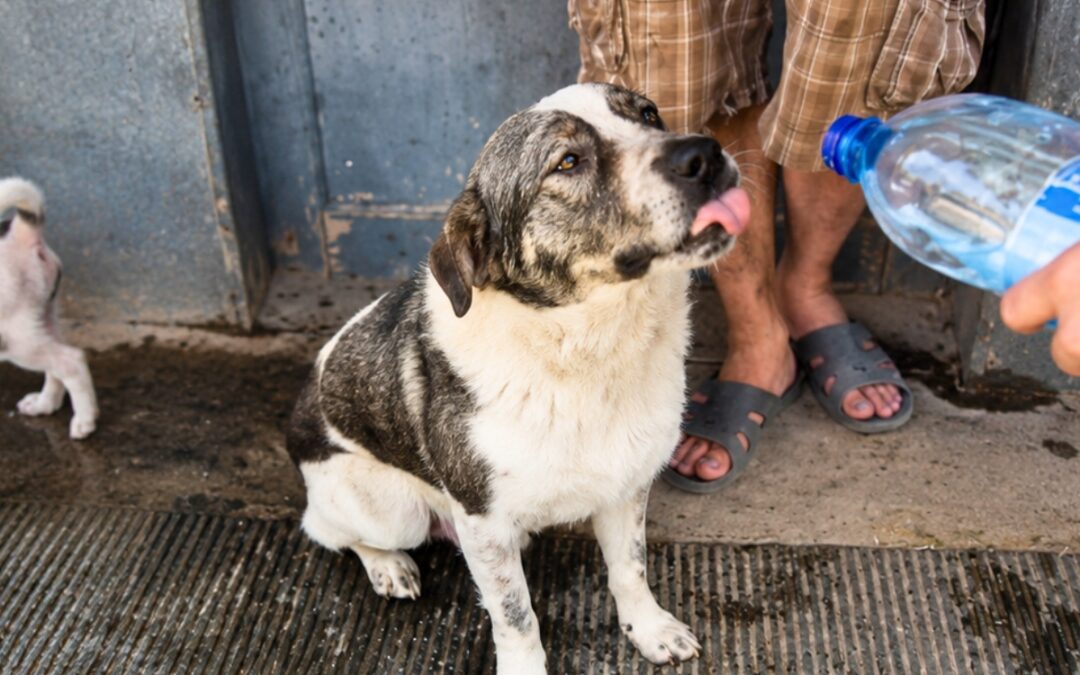
Before she evacuated her frontline village, a Ukrainian woman sat down and wrote two pages about her dog. She described her personality. Her habits. Her favorite treats. The way she liked to be held. She wanted whoever found her to know exactly who she was. Then she folded the letter, handed it to a rescue volunteer, and left.
Her dog’s name was Lypka. The letter exists. And there are hundreds of thousands of animals just like her still scattered across Ukraine, in emptied villages, on broken streets, in shelters that ran out of room long ago.
This is what the war did that the casualty numbers can’t capture. It didn’t just displace people. It broke the small, private bonds between families and the animals who depended on them. The abandoned pets in Ukraine crisis is now one of the largest animal welfare emergencies anywhere in the world. It’s also one of the least talked about.
When Russia launched its full-scale invasion in February 2022, an estimated 12 million Ukrainians were forced to flee. Most had hours, not days. Crossing borders with pets required documentation, carriers, and transportation that families scrambling for survival often couldn’t access. Some left food out and believed they’d be back within a week. Many haven’t returned in four years.
What followed was staggering. Welfare organizations estimate that over one million cats and dogs have been abandoned since the invasion began. A PBS documentary released in February 2026 put the current street population at roughly 150,000 homeless animals. In the first year of fighting alone, UAnimals, one of Ukraine’s largest rescue organizations, reported a 60 percent spike in cats and dogs entering shelters. That was before three more years of shelling, displacement, and shelter closures stripped the response system even further.
The organizations doing the rescue work are experienced and committed. They’re also out of room, out of staff, and out of money.
In December 2025, UAnimals announced it was suspending new evacuation requests. The queue had become unmanageable. At peak periods, they receive around 100 rescue requests per day with nowhere near enough volunteers, shelter space, or funding to respond. As of summer 2026, the backlog still hasn’t cleared. Their veterinary teams travel into frontline zones twice a month, working from 7 a.m. to 10 p.m. and treating up to 500 to 600 animals per mission. By any measure, that’s extraordinary work. It’s still not enough.
Summer makes the situation worse in ways that don’t get much coverage. Heat and dehydration kill strays faster than cold does. Water sources in destroyed villages are gone. Veterinary care can be hours away in regions that still see active fighting. And summer is when rabies risk peaks, which matters more than most people realize.
In December 2025, the World Health Organization confirmed that rabies has become a documented and growing public health threat in Ukraine’s frontline regions. Hospitals near active fighting were reporting five to ten animal bite victims per day, sometimes whole families coming in together. Reported bite cases linked to possible rabies exposure climbed from 1,845 in 2023 to 2,531 in 2025. At least one confirmed human death from rabies had already been recorded by March 2026.
The abandoned pets in Ukraine crisis, in other words, stopped being only an animal welfare story a long time ago. Vaccination and sterilization programs near the front lines are disease prevention for civilians, including children playing in the same streets those animals are living on. When a rescue organization saves an animal in Kherson, it’s also protecting the people living beside it.
Then there’s what’s been happening with the soldiers.
Spend any time around Ukrainian defenders and you notice it. They keep finding cats. In trenches, at checkpoints, in destroyed buildings, at field medical posts. Soldiers who started the war as committed dog people have quietly become cat people. A Washington Post feature from May 2025 documented this as a national pattern: rescuing animals from abandoned villages has become something of a collective instinct among defenders. Combat medics carry home dogs they pulled from rubble. Soldiers name the cats that wander into their positions and build small shelters for them from whatever materials are left.
In April 2026, a soldier with the Ukrainian 14th Separate Mechanized Brigade used a military combat drone to evacuate a cat and a dog stranded in active battlefield territory. He didn’t leave them. The technology built to defend a country was redirected to save two animals that had no way to ask for help. UAnimals confirmed the rescue. Both animals are now living with the soldiers who saved them.
That image is worth sitting with. These are the same defenders that Hope For Ukraine’s Frontline Support program works with directly, delivering supplies, equipment, and relief to the people holding the line. The communities they protect are the same ones where Hope For Ukraine’s Hope Pets program operates. In Kherson and Kryvyi Rih, where HFU has active programs, the human welfare emergency and the animal welfare emergency share the same streets, the same families, and the same need for steady support.
Volunteers working inside Ukraine have said openly that they worry about what happens after the war ends. Once the fighting stops, attention will shift to reconstruction, economic recovery, and resettling displaced families. The animals will likely be the last priority. Given how stretched donor attention already is across multiple global crises, that fear is grounded.
But the need right now is immediate. The shelters are full. The streets are not empty. Rabies cases are rising into the summer. And the families who wrote letters about their dogs before they fled, describing who they were so a stranger might love them correctly, haven’t stopped hoping someone out there is making sure those animals are still okay.
Hope For Ukraine is a New Jersey-based 501(c)(3) nonprofit delivering aid to Ukrainian families, children, defenders, and the animals caught in the middle of this war. Through programs like Hope Pets, Family Support, Medical Support, and A Child’s Smile, Hope For Ukraine works in the communities where the need is highest and resources are thinnest.
Your gift helps Hope For Ukraine reach the families, children, defenders, and animals who cannot wait. Donate today at hfu.org and help us stay present where it matters most.
Frequently Asked Questions
How many pets have been abandoned in Ukraine since the war started? Estimates from multiple animal welfare organizations place the number at over one million abandoned cats and dogs since Russia’s full-scale invasion in February 2022. A PBS documentary released in February 2026 cited at least 150,000 homeless animals currently living on Ukraine’s streets.
Are abandoned animals in Ukraine a public health risk? Yes. The World Health Organization confirmed in December 2025 that rabies has become a growing and documented threat in Ukraine’s frontline regions. Hospitals near active fighting reported five to ten animal bite cases per day, with at least one confirmed human death recorded in 2026. Veterinary vaccination and sterilization programs directly reduce this risk for civilians.
What organizations are helping abandoned pets in Ukraine? UAnimals is one of Ukraine’s largest animal rescue organizations, running veterinary missions into frontline zones twice a month. As of December 2025 they suspended new evacuation requests due to overwhelming demand. Hope For Ukraine’s Hope Pets program supports animal welfare in communities where HFU already operates, including Kherson and Kryvyi Rih.
Why did Ukrainian families have to leave their pets behind? Over 12 million Ukrainians were displaced, many under emergency conditions with little time to prepare. Crossing borders with animals required documentation and transportation that families fleeing active shelling often couldn’t access. Many left expecting to return quickly. Four years later, many still haven’t.
How can I help abandoned pets in Ukraine? You can support Hope For Ukraine’s Hope Pets program and broader humanitarian work by donating at donate.hfu.org/give/486355. Gifts support animal welfare, family aid, medical care, and frontline support in Ukraine’s most affected communities.
Is the animal crisis connected to the broader humanitarian emergency in Ukraine? Directly. Abandoned animals in frontline communities pose real disease risks to civilians. Many of the families and defenders HFU supports live in areas where the animal welfare crisis is most severe. The two emergencies share the same geography and the same need for consistent, on-the-ground support.