
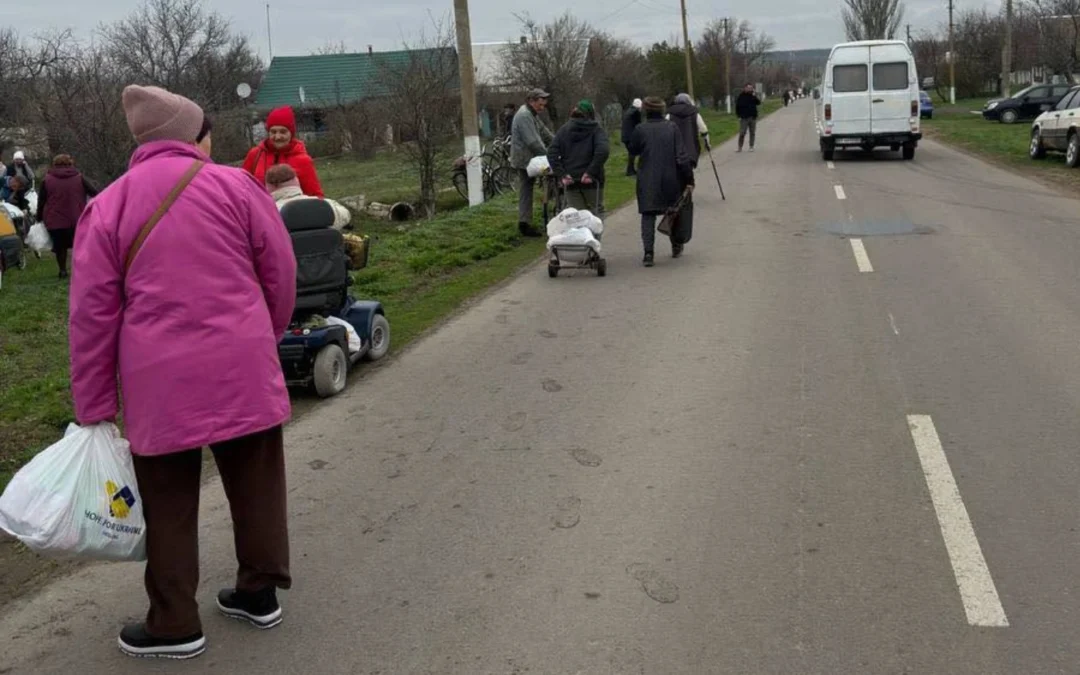
Halyna is 74. She wakes up early on distribution days, wraps a scarf around her shoulders, and starts walking. The road from her village to our collection point takes her the better part of an hour each way.
She doesn’t complain about the walk. She just does it.
Her village, like dozens of others near the conflict zone, has been hollowed out by war. The young people left and some to fight, some to find safety, some to find work. What remains is a community of older residents who stayed because this is home, because they have nowhere else to go, or because leaving felt like losing the last thing they had.
For people like Halyna, our food kit distribution points aren’t just a place to pick up groceries. They are proof that someone still knows they’re there.
Each kit is packed to last. Grains, canned goods, oil, flour are the basics that keep a household going when the shops are closed, too far, or too expensive. For an elderly person living alone on a small pension, a single food kit can mean the difference between eating well for two weeks and going without.
Hope for Ukraine runs regular distributions across villages in the region, coordinating with local partners to identify the communities most cut off from supply chains and most dependent on outside support. We don’t wait for people to find us. We show up where they are and or as close as we can get.
Halyna picks up her kit, thanks the volunteers by name, and begins the walk home. The bag is heavy. She carries it anyway.
The walk that she takes every time without being asked tells you everything you need to know about human resilience. Our job is simply to make sure there’s something waiting for her when she arrives.