
Every morning, elderly Ukrainians wake up and make the same decision:
Do I have enough strength to walk to the feeding center today?
For many, that walk is not optional. It is the difference between eating and going hungry.
Across Ukraine, older people are living through a quiet humanitarian crisis. Most survive on government pensions of around $50 per month — an amount that no longer covers basic food needs as prices continue to rise. Heating costs climb. Bread costs more. Even a simple bowl of soup has become uncertain.
Yet every day, they walk.
They walk slowly, bundled in layers. They carry empty bags, hoping they’ll return home with a loaf of bread. They line up not for handouts, but for dignity — for a warm meal prepared with care.
The Reality of Daily Hunger
For seniors living on fixed incomes, hunger is not an emergency that comes and goes. It is daily.
Rising food prices and limited pensions have made even basic nourishment uncertain, especially for those living alone. Many elderly Ukrainians have no family nearby. Others have lost relatives to war or displacement. For them, soup kitchens are not supplemental — they are essential.
This is the reality facing millions of older adults in Ukraine today.
More than 7 million Ukrainians are estimated to face moderate or severe food insecurity, and seniors are among the most vulnerable. When income is fixed and inflation is relentless, food becomes the first thing sacrificed.
Cooking Every Day — Not Packages, But Meals
In four Ukrainian cities, Hope for Ukraine operates soup kitchens that prepare homemade meals every single day.
These are not packaged rations. They are not shelf-stable boxes. They are warm soups cooked on-site, bread prepared and served by hand, meals designed to nourish both body and spirit.
Each day, more than 1,000 elderly people receive hot meals through this program.
For many, it is the only guaranteed food they will have that day.
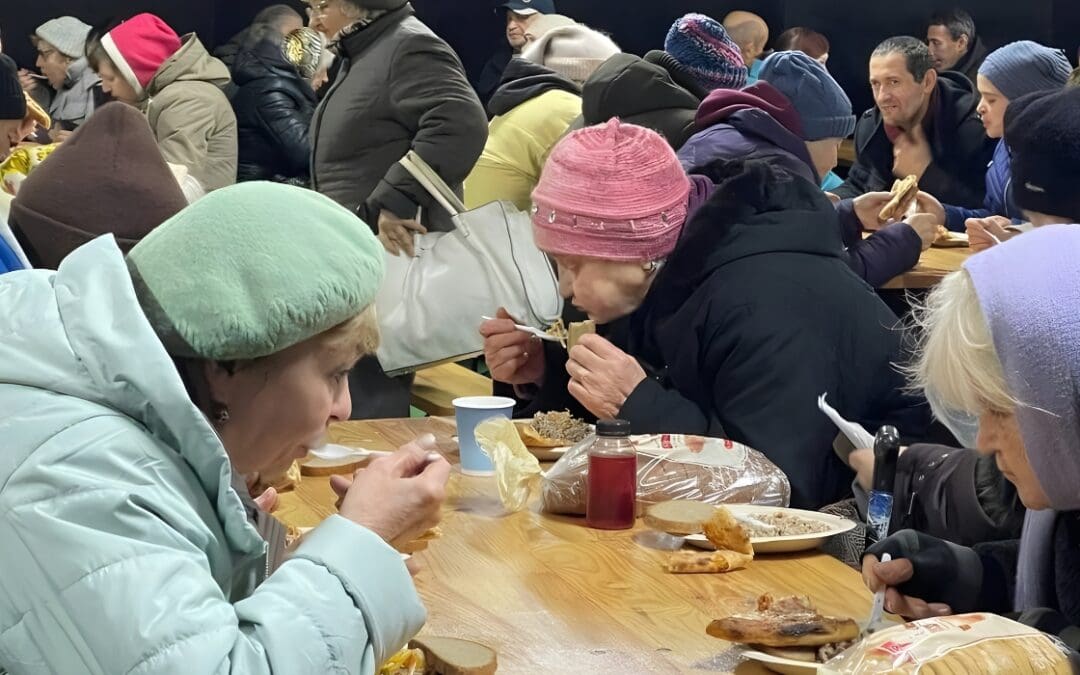
Volunteers and staff know the seniors by name. They know who prefers more soup, who needs bread to take home, who struggles to walk but comes anyway. The meals are served with dignity — seated at tables, shared with others, in a space that feels human.
In a war defined by destruction, these moments restore something vital: routine, connection, and care.
Why Bread and Soup Matter
A loaf of bread is not just food.
A plate of soup is not just nourishment.
They represent stability in a world that has taken nearly everything else.
Many seniors tell us that their day revolves around these meals. They plan their morning around the walk to the feeding center. They conserve energy knowing the effort will be worth it. Some bring containers to save bread for later. Others linger, simply grateful for warmth and conversation.
These meals allow seniors to remain independent longer. They prevent dangerous choices between food and heat. They offer reassurance that, at least today, hunger will not win.
A Quiet Moment of Gratitude
Inside the feeding centers, the atmosphere is calm. You hear spoons against bowls. Quiet conversation. Sometimes silence — the kind that comes from relief.
There are no speeches. No grand gestures. Just people eating, slowly, carefully, with gratitude.
For many seniors, these meals are not charity. They are survival.
And for Hope for Ukraine, this work is about consistency. About showing up every day. About ensuring that no elderly person has to face hunger alone.
Every Day Matters
The most important word in this story is every day.
Not once a week.
Not in emergencies only.
But every morning, every afternoon, every evening.
As long as food insecurity continues, the need remains constant. And so does the response.
Through this program, Hope for Ukraine continues to provide daily nourishment, dignity, and hope — one bowl of soup, one loaf of bread, one table at a time.
Because for thousands of seniors across Ukraine, this is not just a meal.
It is life, sustained — every day.