
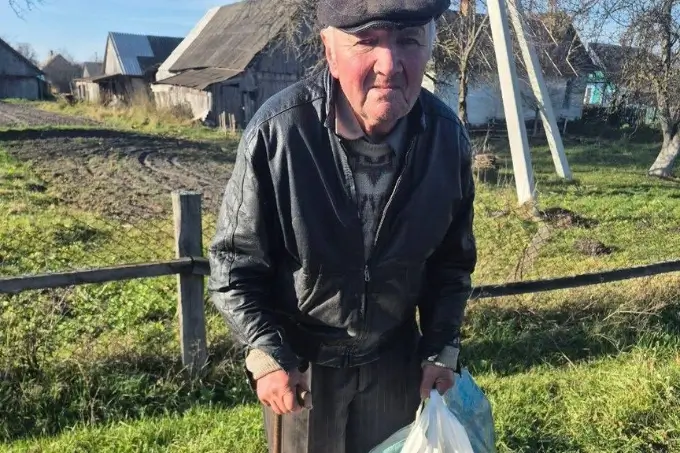
Newly released figures from Ukraine’s Coordination Headquarters reveal a deeply troubling development that is reshaping the humanitarian conversation around the war: 46,327 Ukrainian civilians have been forcibly mobilized into the Russian military in occupied territories. Under international humanitarian law—including the Fourth Geneva Convention, which prohibits an occupying power from compelling protected persons to serve in its armed forces—this practice is explicitly categorized as a war crime.
For families still living under occupation, forced mobilization has become a daily threat. Civilians are taken from their homes, workplaces, or checkpoints with little warning and are transported across the front lines. Many receive minimal or no military training before being deployed. According to field accounts, large numbers are sent directly into high-risk combat zones, resulting in severe casualties, rapid capture, and long-term trauma for surviving families. These civilians, coerced into fighting against their own country, represent one of the most painful and underreported human costs of the ongoing conflict.
A second data point underscores the scale of the humanitarian tragedy: one in every six captured Russian soldiers in Ukraine is actually a Ukrainian civilian from occupied territories. This startling statistic reveals just how deeply the forced mobilization system has penetrated daily life in the regions under occupation. It also highlights the impossibility of truly voluntary participation—these individuals are being placed in uniforms not by choice, but by coercion and fear.
At Hope For Ukraine, we hear from families who have been separated, displaced, or left without answers. Many are searching for relatives who never returned home after being taken. Others live under constant pressure, unsure whether their sons, brothers, or husbands will be targeted next. As a humanitarian organization, our work focuses on documenting these stories, supporting displaced families, and providing aid to communities living under extraordinary stress. You can learn more about our programs supporting families and internally displaced persons here: https://hfu.org/what-we-do/
While the conflict itself receives global attention, this specific dimension—the systematic forced conscription of civilians—remains significantly under-covered. Human rights organizations and international legal experts have identified forced mobilization as a critical violation of the laws of war. Reputable institutions such as the International Committee of the Red Cross (ICRC) outline these protections clearly: https://www.icrc.org/en
The new data not only reinforces the scale of the issue but also highlights the urgent need for greater visibility, documentation, and humanitarian support. These civilians are victims of coercion, not combatants by choice. Their families deserve answers, and the international community deserves accurate reporting on the reality unfolding in occupied regions.
If your news organization, publication, or research outlet is interested in exploring this story further, our CEO Yuriy Boyechko can provide additional testimony, humanitarian context, and firsthand accounts from families affected by forced mobilization. Hope For Ukraine remains committed to ensuring these voices are heard while continuing to support those impacted by the conflict.
To support our humanitarian mission, visit:
👉 https://donate.hfu.org/give/486355/