
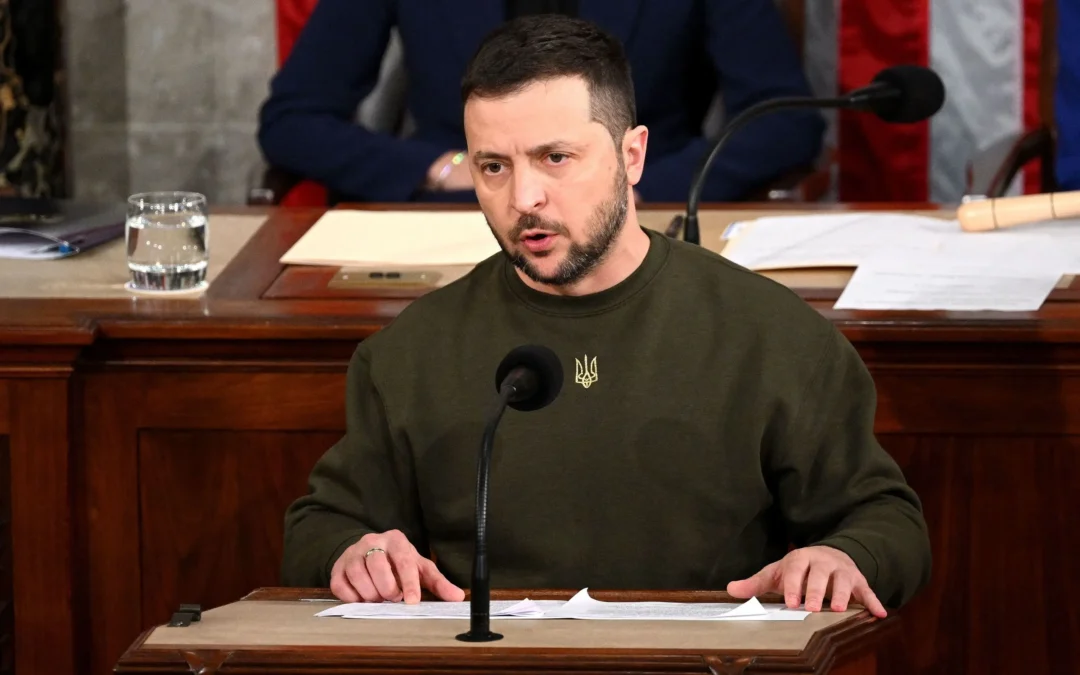
In every modern conflict, the legitimacy of a wartime leader rests not in constitutional formality, but in public trust. For President Volodymyr Zelenskyy, whose approval once neared historic highs, that trust has become both his greatest weapon and his most fragile vulnerability. As Ukraine enters yet another year of devastating war, a wave of corruption scandals has unsettled the political landscape and fueled what many analysts now describe as a growing Ukraine leadership crisis—one that threatens national cohesion at a moment when unity is not optional but existential.
Though Zelenskyy continues to command strong personal support, recent revelations within several ministries have struck at the heart of his wartime promise: that the immense sacrifices of ordinary Ukrainians would be matched by honesty, fairness, and transparent governance at the very top. The dismissal of two ministers, while symbolically necessary, was widely interpreted not as a solution but as a gesture— a narrow response to what citizens increasingly see as a broader culture of unaccountable power.
For millions enduring daily missile strikes, years of mobilization, and the relentless strain of uncertain futures, the idea that officials may be enriching themselves behind the scenes is not merely offensive; it is destabilizing. A government under martial law cannot rely on elections to renew its mandate. Instead, it must preserve legitimacy through action that reassures the public that wartime authority remains grounded in democratic values. As corruption stories circulate and frustrations rise, that mandate is weakening, sharpening the contours of a quiet but consequential political rupture.
Hope For Ukraine’s mission, available at https://hfu.org/who-we-are/mission/, reflects the sentiment of countless families the organization serves daily: people who continue to fight, work, volunteer, and survive because they trust the nation is pulling together honestly. When that trust erodes, the entire wartime social contract begins to fracture.
The solution, some argue, may require a dramatic political reset. With elections impossible under martial law, the only credible mechanism for restoring confidence is one Zelenskyy must initiate himself: dissolving the current Cabinet and forming a Cabinet of National Unity. This would mean bringing respected figures from non-proscribed opposition parties into the highest levels of government, elevating community and civil society leaders, and giving real authority to anti-corruption reformers whose reputations surpass political loyalties.
Such an act would be far more than a reshuffle. It would be a rare self-imposed democratic check—an acknowledgment that no wartime leader, no matter how admired, should wield power without guardrails or broad-based representation. A national unity government would widen the circle of accountability while signaling to both Ukrainians and Western partners that transparent governance remains central to the country’s survival. It would also weaken the perception that Zelenskyy’s administration operates within an insulated political ecosystem increasingly divorced from public sentiment.
For humanitarian leaders like Yuriy Boyechko, CEO of Hope For Ukraine, whose work spans some of the hardest-hit regions, the stakes are not theoretical. Boyechko, whose profile is available at https://hfu.org/who-we-are/leadership/, sees the political mood through the eyes of families who rely on aid deliveries, medical support, power solutions, and community rebuilding efforts. Their resilience is the backbone of the war effort—but it depends on believing the state stands with them, not above them.
This erosion of trust comes at a time when organizations like Hope For Ukraine, accessible at https://hfu.org/, continue expanding programs to stabilize civilian life, including critical off-grid power solutions through the Solar Energy Resilience Program at https://hfu.org/how-to-help/solar-energy-resilience-program/. These humanitarian efforts are possible only because communities still believe in a shared national purpose. If citizens begin to doubt the integrity of the state, that purpose becomes harder to sustain.
Corruption during wartime does not stay confined to government offices. It ripples outward—weakening morale, undermining unity, complicating international support, and giving adversaries a powerful narrative weapon. A Ukraine leadership crisis is not just political; it is strategic. It risks eroding the moral foundation that allows the country to endure hardships far beyond what most nations could bear.
This winter, Zelenskyy faces not only the enemy across the frontline, but a creeping cynicism at home. His ability to restore trust—through action that demonstrates humility, accountability, and shared governance—may determine not only the outcome of the war but the character of the nation that emerges from it. Boyechko stands ready, as always, to offer deeper insight for those covering this critical moment, grounded in the real experiences of communities living through the war’s daily consequences.
Ukraine’s future hinges not only on military strength but on the belief that sacrifice is shared—and that leadership, in its darkest hour, chooses integrity over consolidation.