
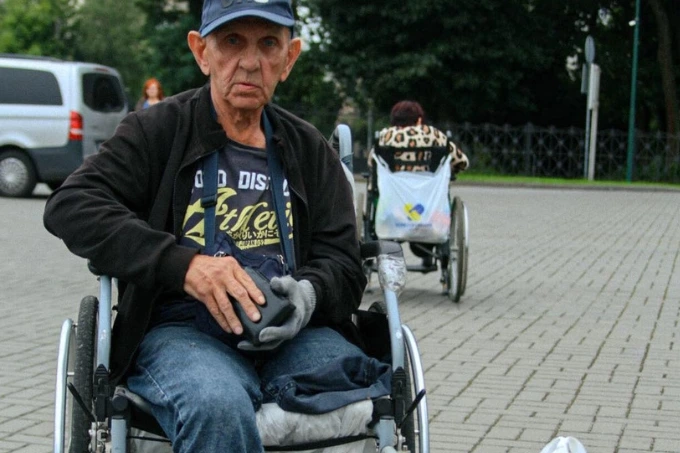
As the war in Ukraine grinds into another year, its human toll is becoming increasingly visible long after the fighting subsides. Tens of thousands of Ukrainian defenders have returned from the front lines with severe injuries that permanently alter how they move through the world. While advanced prosthetics offer long-term hope, the scale of need far exceeds current capacity, leaving many veterans waiting years for solutions that would allow them to regain full mobility.
For now, the gap between injury and recovery remains wide. Many wounded defenders face daily challenges accessing rehabilitation services, navigating damaged infrastructure, and participating in civilian life. Mobility limitations have emerged as one of the most immediate and under-addressed consequences of the conflict, particularly as medical systems remain stretched and supply chains for prosthetics struggle to keep pace with demand.
Hope For Ukraine, a U.S.-based humanitarian organization, identified this gap early and launched what it calls the Frontline Mobility Project. The initiative focuses on supplying rugged, all-terrain electric mobility scooters to wounded Ukrainian defenders as an interim solution while long-term prosthetic care remains out of reach.
According to the organization, the goal is not to replace prosthetics but to address an urgent need in the present. Electric mobility devices allow recipients to move independently, attend medical appointments, and reengage with their communities—often for the first time since their injuries. Advocates say the psychological impact of restored mobility can be just as significant as the physical benefit, offering a sense of autonomy during a prolonged recovery process.
The initiative has already reached hundreds of wounded defenders, but organizers say this is only a fraction of the need. In response, Hope For Ukraine plans a major expansion of the Frontline Mobility Project beginning in the first quarter of 2026. The expansion represents a significant logistical and funding effort aimed at accelerating procurement and distribution so that thousands more veterans can be reached over the following two years.
The organization notes that the devices selected for the program are designed to perform in difficult terrain and damaged urban environments, making them suitable for post-conflict conditions. Distribution efforts are coordinated with local partners to ensure the scooters reach those with the greatest need while minimizing logistical bottlenecks.
Humanitarian experts increasingly emphasize that recovery efforts must address not only survival but quality of life. As prosthetic programs continue to scale, interim mobility solutions may play a critical role in preventing long-term isolation and economic exclusion among wounded veterans.
Hope For Ukraine is now seeking media partnerships to bring broader attention to the mobility crisis facing Ukrainian defenders and to the scalable solutions being implemented. Representatives from the organization are available to discuss the technology behind the project, the challenges of distribution in conflict-affected regions, and the human stories that illustrate the urgency of restoring mobility before years of waiting take their toll.