
The Ukrainian children’s mental health crisis has been building for four years.
A peer-reviewed study published in BMJ Global Health in March 2026 synthesized findings from 37 separate studies on children through the age of 19 living through this conflict. The results: 16% of Ukrainian teenagers exposed to the full-scale war now show symptoms of PTSD, compared to just 1% of their unexposed peers. More than 10% experience severe depression.
Meanwhile, a World Vision survey conducted in January 2026 found that only 28% of households in frontline areas like Kharkiv reported that children could access services from NGOs or UN agencies. That means 72% of families near the front have no access to child protection or mental health support at all.
Hope For Ukraine operates directly inside that gap.
War Wreaks Havoc on the Young
The numbers are striking, but they don’t fully describe what’s happened to an entire generation of Ukrainian kids.
Plan International’s February 2026 report found that Ukrainian children have spent up to 5,000 hours sheltering underground, the equivalent of nearly seven months of their lives spent hiding. One in three children now reports that school exams are more stressful than air-raid sirens, reflecting how deeply the conflict has reshaped what these kids consider normal.
Let that sink in. Children are adapting to the sounds of war and growing desensitized to the constant threats to their health and safety to the point that an impending test is of greater concern.
The same Plan International report documents the psychological damage in concrete terms: persistent fear, nightmares, increased aggression, social withdrawal, and significant difficulties concentrating. Mental health specialists working in Ukraine are also reporting alarming increases in memory and speech impairments, particularly among children living near the heaviest areas of drone and missile strikes.
For the very youngest, the damage is developmental. UNICEF reports that in frontline regions, 83% of young children show signs of emotional distress and delayed development, and many have never attended kindergarten. These are the years when the brain builds the foundation for language, social connection, and emotional regulation. For a significant number of Ukrainian children, those years have passed in a shelter.

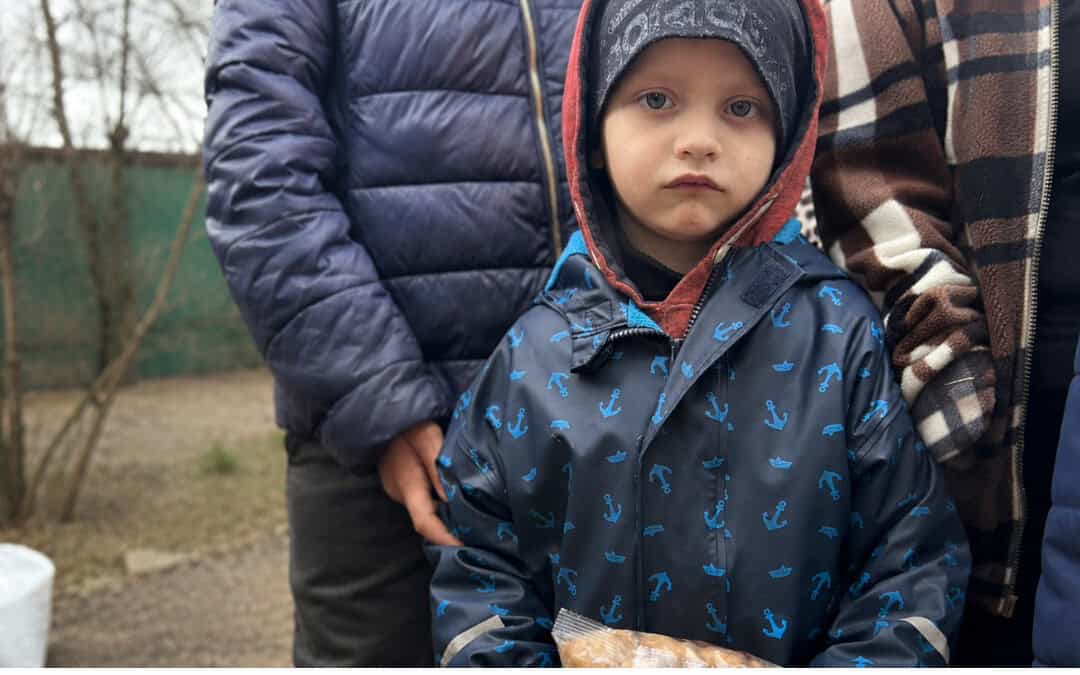
*Mykhailyk Podzerko, a boy with special needs, initially attended classes with his mother and mostly observed the creative process.
4.6 Million Children. Four Years. No Normal Classroom.
Education has been one of the grievous casualties of this war.
4.6 million Ukrainian children are now in their fourth consecutive academic year under full-scale invasion. More than one-third are not learning in classrooms. Eleven percent rely entirely on online education. Since February 2022, around 2,800 schools have been damaged or destroyed.
For children in frontline regions, it’s worse. The communities closest to active fighting are the ones with the fewest resources and the most need. Schools that remain open operate under constant threat. Many children have stopped going.
For some kids, the equivalent of an entire primary education has passed in fragments, in basements, or on a screen in a cold apartment. Many children have been forced to flee their homes multiple times, losing bedrooms, playgrounds, and classrooms, with one in three having experienced a close friend or family member killed or injured.
Day of Hope
Over the past weekend, Hope For Ukraine held a Day of Hope event for children living near the frontline. There were sports, arts and crafts, and food. Day of Hope celebrated the end of the school year and recognized the progress of our after-school students.
Hope For Ukraine’s after-schoole education and art therapy programs provide structured creative activity and safe social spaces as mental health interventions for children experiencing trauma.
When Mykhailyk first started attending Hope For Ukraine’s children’s program, he came with his mother. He sat at the edge of the room and watched the other kids. He didn’t participate. He was painfully reserved and fearful.
Last weekend, months after his first day, Mykhailyk showed up on his own. He sat with the other kids, laughed, and created. He’s grown confident and more independent.
That shift, from the edge of the room to the center of it, is what psychosocial support, like our programming, makes possible. More support is needed to reach all of the families in need.
World Vision’s January 2026 survey of displaced households in Kharkiv found that most of these families are headed by women, all have children, and have been displaced for an average of nearly three years. Seven in ten have no access to any organized child support or mental health service.
Hope For Ukraine’s A Child’s Smile Program and Family Support Program are designed with these families in mind. The work happens in communities that most organizations don’t reach, providing food, emotional support, creative programming, and consistent human presence.
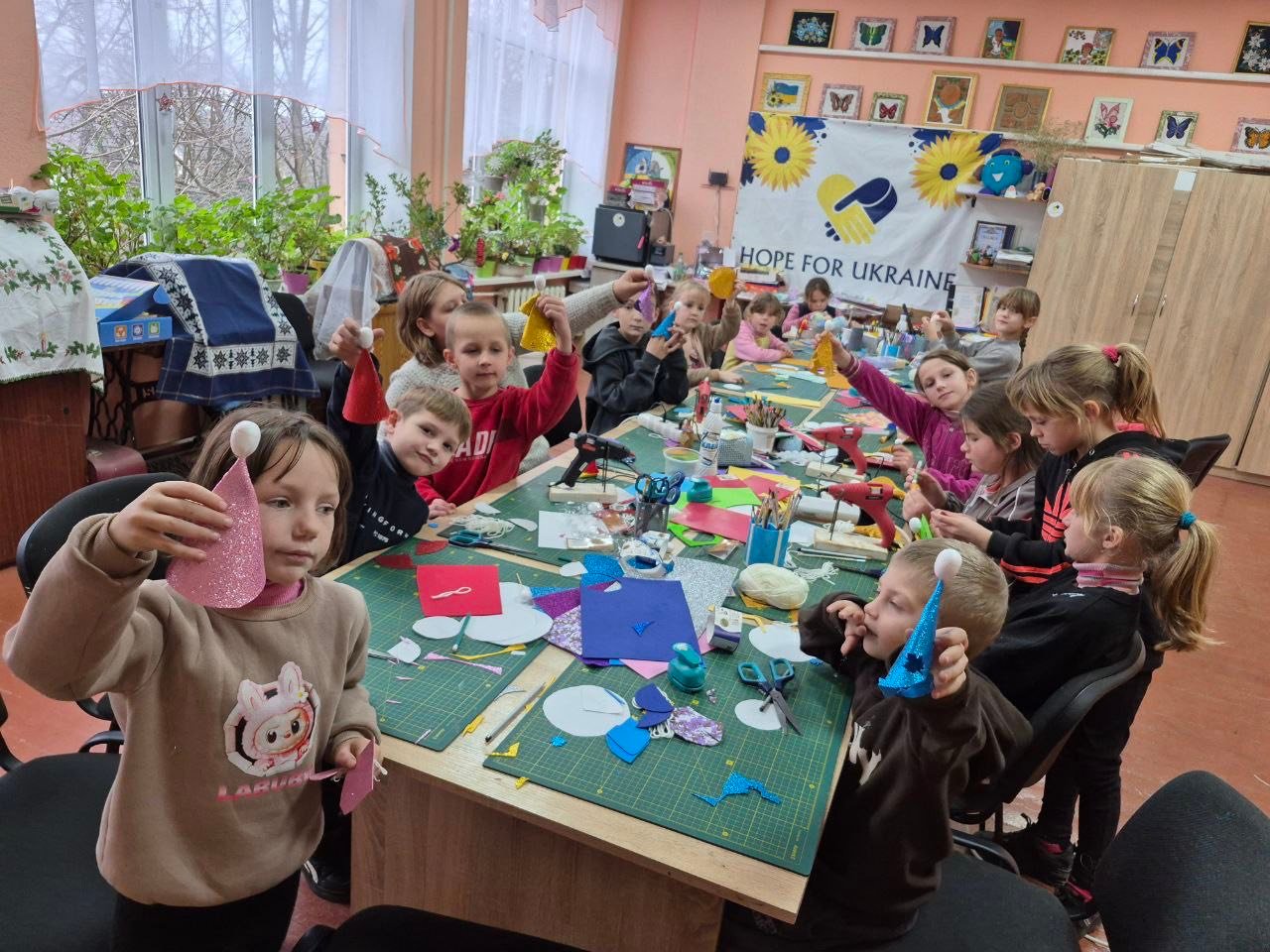
*Children in the Hope for Ukraine afterschool program making arts and crafts
Help Ukrainian Children Right Now
The Ukrainian children’s mental health crisis will not resolve on its own. The war is in its fifth year. The psychological damage accumulates with every month of exposure, and most frontline families have no other support.
Hope For Ukraine is one of the organizations working inside that gap. Your donation directly reaches families and children in communities near the front who have nowhere else to turn.
Donate today to help Ukrainian children, seniors, and families receive the food, shelter, medical care, and human support they need.
To support student success all year, join Hope Circle, our community of passionate monthly donors.